
The lumbar dial on my old desk chair spins with zero resistance now. It stopped catching sometime last year, which is a specific kind of chair failure nobody warns you about: not a dramatic collapse, just a slow surrender that leaves you sitting in something that looks supportive and does nothing.
Quick disclosure, because it matters for what follows: the furniture links here are affiliate-tracked, and buying through one earns me a small commission at no extra cost to you. That's relevant because the myth this piece corrects is one affiliate content helps spread — that the right chair, by itself, fixes bad posture. It doesn't. A Herman Miller Mirra 2, or any other well-built piece of ergonomic seating, removes the things actively working against your body. It doesn't replace the parts of posture that were never about the chair in the first place.
The Chair-Fixes-Everything Myth
Here's the version of this myth I believed for longer than I should have, five years into working from what's technically a spare bedroom: shoulder tension was just a Thursday-and-Friday tax I paid for a heavy call schedule, and the fix was reaching for ibuprofen before the next one started. That routine held for months without addressing why my shoulders locked up in the first place; it just numbed the symptom on a schedule, which is its own quiet kind of failure. Nobody selling office furniture wants to admit that a body already carrying tension from bad habits, bad sleep, or a dozen unrelated things won't unwind itself just because the seat underneath it got smarter.
Mesh Doesn't Win on Comfort — It Wins on Airflow
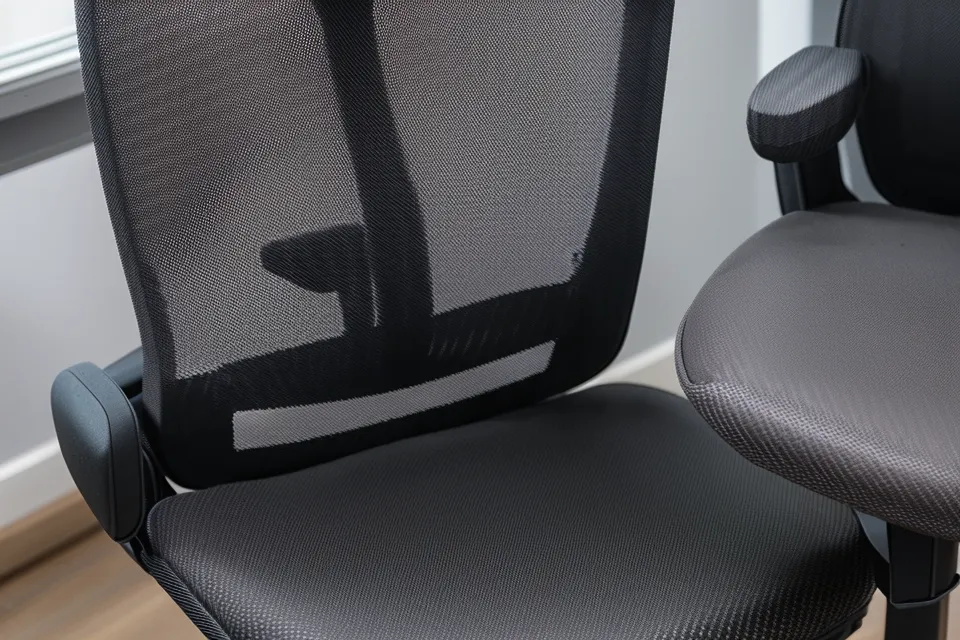
Ask five people whether mesh or foam wins and you'll get five confident answers, none of which account for the room the chair actually sits in. The Mirra 2 runs on an elastomeric suspension instead of a foam pad, and the honest case for it isn't comfort, it's airflow. My desk sits under a window that throws a hard slice of afternoon sun across the monitor most days unless I catch the blinds in time, and a chair that traps heat under you for eight hours creates its own posture problem: you start shifting and slouching just to cool off, which undoes whatever the lumbar support was doing in the first place. I looked hard at Branch's lineup before deciding against it — solid chair, seven-year warranty, meaningfully less money — but Herman Miller's twelve-year coverage on the parts most likely to fail (cylinder, casters, mesh) tipped it for an office that runs warm most of the year. Warranty length isn't a marketing flourish here; it's one of the more honest signals a company gives you about how long it expects its own materials to survive daily use, especially set against a competitor that won't commit to one at all.
What Foam Still Gets Right
Foam still has a real case, and I won't pretend otherwise: something like the Steelcase Amia gives a more consistent, cushioned pressure distribution for people who find suspended mesh feels unstable underneath them, and if your office runs cold instead of hot, that's a genuine advantage, not a consolation prize. The seat pan on my old chair told its own story about that tradeoff: press a palm into it by midafternoon and you could feel exactly how little bounce was left in it, foam gone flat in the one place it needed to hold shape. Mesh doesn't compress that way, which is really the whole argument for it — not softness, but consistency measured in years instead of months.
Learning Which Lever Actually Does What
A chair like this comes with more adjustment points than most people bother to use, and a second myth lives right there — the idea that more dials automatically mean better support. Recline tension calibration matters more than people think: set it too loose and you're doing core work all day just to stay upright, set it too tight and the chair stops responding to you at all. Lumbar support gets treated like the whole story when it's really one variable among several — worth its own deep dive for anyone managing sciatica specifically, which isn't what's going on here. Get the calibration right, though, and the proof shows up as absence, not as a moment: a two-hour client call went by last month without a single shift to relieve a stiff hip, and the only reason it stood out afterward is that it used to happen on nearly every call.
Seat depth and armrest range matter just as much, and they're the two settings most spec sheets bury below the headline lumbar feature. A reader named Destiny Hawkins emails me every few months with another round of questions before she'll commit to spending real money on anything, and she's the one who pointed out that most "best ergonomic chair" lists quietly assume a body considerably taller than hers. Chair-size-to-body-fit is a real variable, not a footnote — test seat depth and armrest reach against your own frame before a return window closes, not after.
A Traditional Backrest Still Has Its Place
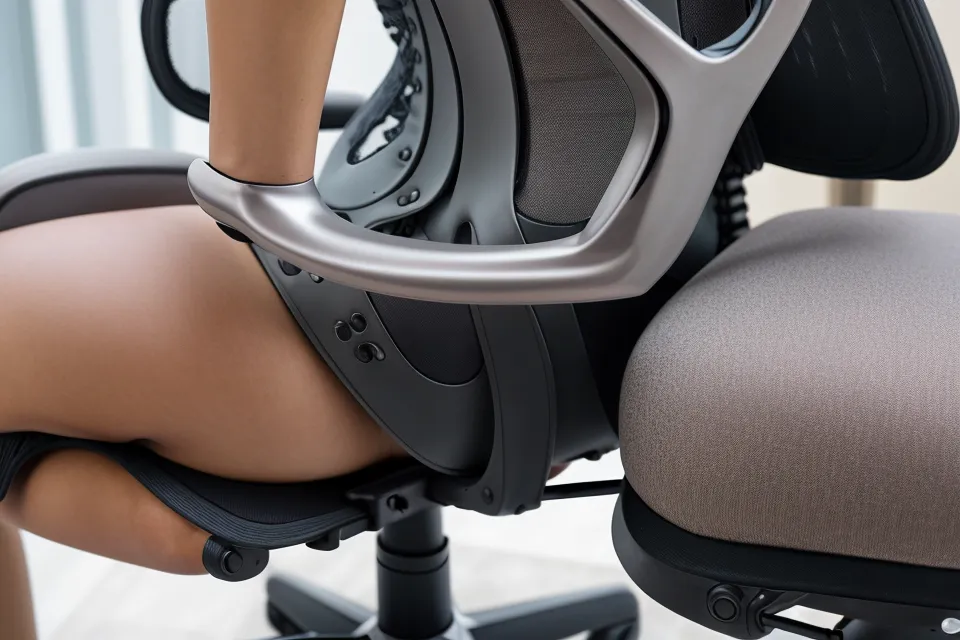
If mesh chairs and their learning curve of levers sound like more effort than you want, my Steelcase Think Review covers a more traditional option without that curve attached. The Mirra 2 takes a different approach: it flexes through a perforated polymer back that moves with each shift in posture, so the support follows you instead of holding you in one fixed position. That's the real case for a flexing-back design, and it's also why the chair fumbled its first week in this house — I kept reaching for the tilt tension mid-call out of habit, the way you'd nudge a rearview mirror, and more than once I overcorrected and dropped back several inches before catching myself on camera.
The Rest of the House Faces the Same Test
None of this stays contained to one chair, and the same myth, that the object alone solves the problem, shows up everywhere else in a house running on remote work and a toddler. The Lovesac sectional in the living room earns its keep because the covers come off and wash, not because the foam inside is some kind of miracle material; that's a washability-rating question, and it's the same question worth asking about a rug's or a sofa's stain-resistant fabric before a coffee mug or a juice box finds it first. A modular sofa that reconfigures when the room or the family changes solves a completely different problem than one that just photographs well in a showroom, and a desk that folds away into something that doesn't announce "home office" during a video call is solving a concealed-workspace-footprint problem, not a chair problem. A standing desk's real spec is its height range at both ends, not whether it looks sleek raised halfway up. A monitor set below eye level undoes a good chair just as fast as a bad one does: you crane forward to see it, and the chair has no say in what your neck decides to do. The Branch Verve is proof the same trap catches good-looking chairs too — gorgeous backrest, just not enough flex in it for a longer frame, which meant it corrected my posture into a position that wasn't actually mine.
Twelve Years of Warranty Changes the Math
Somewhere in my garage sits the evidence for the buy-cheap-replace-often cycle: three dead task chairs, one with a cylinder that wouldn't hold height and two with built-in lumbar supports that gave out inside a year. Every trip back out to the shops near North Hills to swap one for "the next one" added up to real money before I ever looked at a chair with an actual warranty attached to it. My neighbor Jacinda, two doors down, treats every store's return policy like a competitive sport, and she's the one who pointed out that a twelve-year warranty covering gas cylinder, casters, and mesh isn't a marketing number so much as the manufacturer betting that the parts most likely to fail, won't, for more than a decade of daily use. Spread an upfront number that makes you flinch over twelve years and the annual cost gets a lot less dramatic than the sticker suggests.

Is This the Right Fix for Your Home Office Setup?
If your home office setup runs warm, involves long stretches of video calls, and you're tired of replacing remote-work gear every year or two, the Herman Miller Mirra 2 earns its price the way a good appliance does: you stop thinking about it, which is the actual point. If you run a cold basement office, or you just prefer a softer, cushioned seat underneath you, a foam-based option like Steelcase is the more honest fit, not a downgrade from it. What neither chair will do is fix posture that's being undone by something outside the chair entirely: bad sleep, a desk set at the wrong height, a monitor you're still craning toward out of habit. Talk to a doctor or a physical therapist about persistent pain before assuming any single piece of furniture is the missing piece. A chair can stop making things worse, and for a lot of people that's a genuinely large win. It's just a different verdict than "fixed," and the furniture industry has a real financial incentive to blur that line.
The Mirra 2 has become the one piece of furniture in this house nobody's fighting with anymore: not the toddler racing die-cast cars under the base, not the humidity that sits in this house most of the year, not my own habit of judging every purchase by how fast it'll end up added to the graveyard in the garage. That's a real result, worth an upfront number that still makes me flinch a little. It's just not the same as a fixed spine, and treating a chair review like it can promise that is the myth worth retiring for good.
Herman Miller
Pros
- + 12-year warranty covers the parts that actually fail like the gas cylinder and mesh
- + Triflex back provides incredible airflow for hot home offices
- + PostureFit SL dial offers precise support for the base of the spine
- + Casters are exceptionally smooth and toddler-racetrack approved
Cons
- ✘ Significant upfront investment compared to mid-tier brands
- ✘ Adjustment levers have a steep learning curve during the first week