
Toddler snoring against my collarbone near the end of a long work stretch, I stood up from my desk chair and felt nothing — no wincing, no rolling my shoulders back to unstick them, no bracing for a jolt in my lower back. That's the actual test for whether a big and tall office chair earns the label, not the marketing copy stamped across the box. A lot of chairs sold under that banner are just oversized recliners with a swivel base bolted on underneath; the ones actually worth the money are built with real ergonomic hardware from the gas cylinder up, and there's a fairly short checklist for telling the two apart.
Quick disclosure before the breakdown: the chair and furniture links below are affiliate-tracked, so I earn a small commission if you buy through one — the price you pay doesn't change. Nothing here is a paid placement. Everything mentioned got tested in my own home office in Raleigh, or picked apart after I returned a version that didn't hold up.
Weight Capacity: Where Big and Tall Filtering Starts
Start with the number that almost never gets printed in bold: weight rating. La-Z-Boy's Big and Tall line is built around a 400-pound capacity, a real jump from the 250-pound ceiling on most chairs sold at office-supply stores. That gap isn't only about who fits comfortably — a frame rated that much higher usually means a heavier-gauge steel base, a sturdier gas cylinder, and hardware that won't loosen after a year of leaning back to think through a deadline. Skip a listing that doesn't state a weight rating at all; that's usually the tell that it wasn't built to a heavier-duty standard in the first place, and a chair meant for full-time remote work needs that duty rating more than an occasional-use chair ever would.
Does a Longer Warranty Actually Mean a Better Chair?
Mostly, yes. Warranty length is one of the few honest signals a brand gives you about how long it expects its own hardware to survive. Herman Miller and Steelcase both back their chairs with twelve-year coverage on the parts that actually fail: casters, gas cylinders, mesh. Branch backs its ergonomic chair for seven years, which is generous given it sits well below the flagship brands on price. La-Z-Boy takes a different angle. The frame and reclining mechanism carry a limited lifetime warranty, which tracks with how the brand markets itself around recliners built to survive a toddler using the footrest as a launchpad for years. None of that guarantees comfort for your specific back, but a company willing to cover a part for over a decade usually isn't hiding a cheap gas cylinder underneath the upholstery.
Worth admitting up front: not every fix works. A stability ball under the desk for "active sitting" sounded reasonable and just left me sliding forward in the seat every twenty minutes, correcting posture with one hand while typing with the other. That's the kind of trial and error that eventually pushes someone toward spending real money on a chair engineered for the job instead of a workaround.
Lumbar, Seat Depth, and Armrests: The Adjustments That Matter
Three adjustment points decide whether a chair actually fits your body or just looks the part in a product photo. Lumbar support is the one everybody talks about, and getting it wrong is the fastest way to end a video call rubbing your lower back. Seat depth matters just as much and gets ignored more — if the front edge of the seat pan presses into the back of your knees, no amount of lumbar adjustment fixes that discomfort. Armrests round out the list, and the good ones move in more directions than just up and down, since a rigid armrest that doesn't slide in or out just means learning to type with your elbows in the wrong spot. One low-tech check that says more than a spec sheet: press a palm flat into the seat pan for a few seconds. Foam that springs back once you let go is still doing its job; foam that stays dented is already on its way to sagging, and no lumbar dial fixes cushioning that's already breaking down. If you're chasing a full setup, my notes on how to choose office chair lumbar support cover that piece in more depth than I can fit here.
Cloud Comfort Versus Cockpit Precision
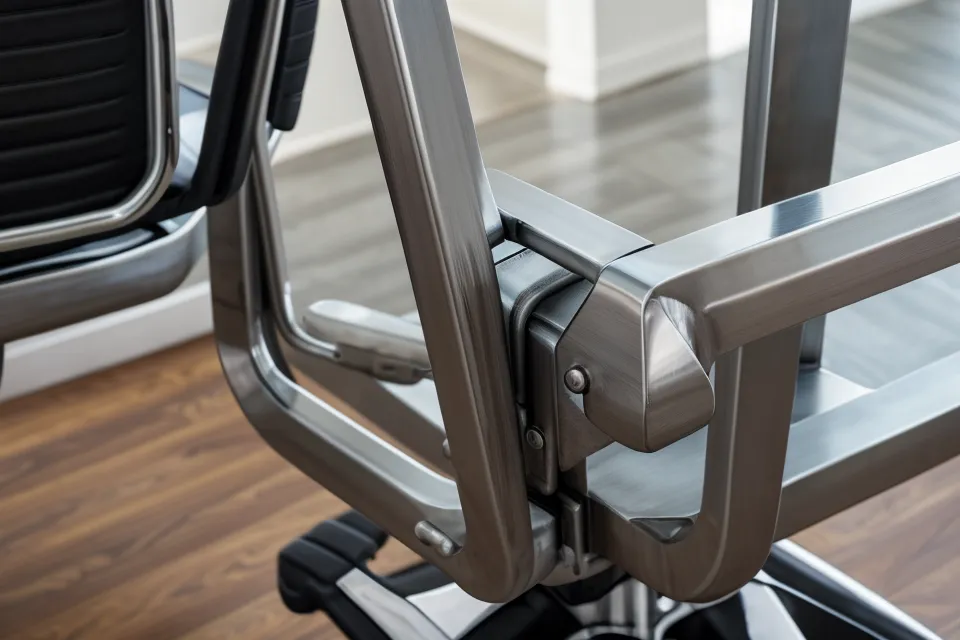
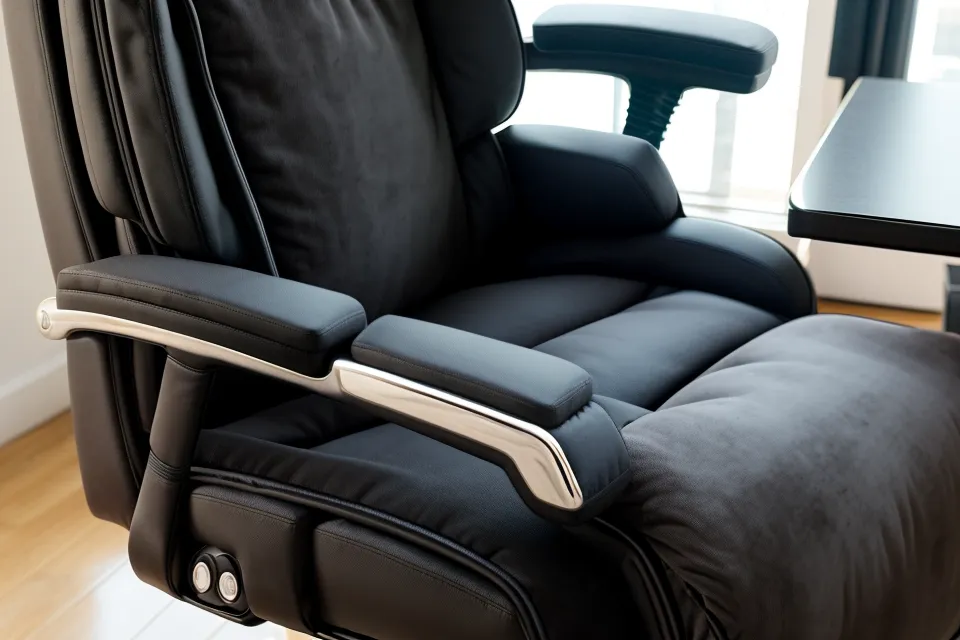
Put the two side by side and the trade-off shows up fast. The Herman Miller Aeron is precision-engineered — mesh that stays cool through a humid North Carolina afternoon, a frame light enough to scoot between a printer and a desk without much effort. The La-Z-Boy leans the opposite direction: dense, plush, closer to a recliner you happen to work in, which is a genuinely tempting proposition on a day that stretches into the evening. Those heavy-duty steel frames that make the Big and Tall line so stable also make it heavy — stable as a rock, but someone who likes to scoot around a small room will feel that extra weight in their legs by the end of the week. For sizing questions on the mesh side, there's a separate breakdown on Herman Miller Aeron chair sizes, since fit changes more than people expect between frame sizes.
Picking a Flexing Back Over a Fixed One
Task-heavy days are where the picture shifts again. The Steelcase Gesture uses a LiveBack mechanism that flexes along with your spine instead of holding a fixed curve, which matters more than it sounds like once you've spent a full day moving between typing, reading, and leaning in for a call. Recline tension is part of that picture too. A chair that resists too hard when you lean back fights your own movement, and one with no resistance just dumps you backward, so that dial is worth testing rather than leaving on the factory setting. Steelcase matches Herman Miller's twelve-year warranty, which makes the higher upfront cost feel less like a splurge and more like a long-term bet against back pain. The Branch Ergonomic Chair takes the opposite approach: it's roughly half the cost of the legacy brands, skips the 400-pound rating the La-Z-Boy carries, but pairs well if you're outfitting a full office around a standing desk. Readers weighing the two bigger names against each other might find Steelcase Gesture vs Herman Miller Embody useful for that specific comparison.
Fitting the Chair Into the Rest of the Home Office
A chair is only one piece of a home office that actually functions for eight hours a day. Monitor height matters just as much — eyes should land near the top third of the screen without tipping the chin up or down, which is a separate rabbit hole from chair shopping but connects directly to why the neck starts aching even in a great chair. Anyone building the setup around a sit-stand desk should also check the height range before buying, since a desk that doesn't go low enough for a shorter frame or high enough for a taller one undercuts the whole point of switching positions during the day. None of that is a reason to skip a good chair — it's a reason to treat the chair as one part of a system instead of the whole fix.
Once a toddler and a snack tornado are part of the household, that same logic stretches past the desk chair. Sturdier pieces earn their keep because they can be maintained instead of replaced — I've been using Lovesac Sactionals in the room next to my office since the covers unzip and go straight into a washing machine, which matters more than any style detail once juice boxes enter the picture. The same washability question applies to a rug parked under a rolling chair, and it's worth checking before buying rather than after the first spill sets in. That's really the durability-versus-price argument in miniature: paying more once for something built to be maintained usually beats replacing the cheap version every year, whether that's a chair, a sofa, or the rug underneath both.
Where the La-Z-Boy really earns its keep is that lower-back curve that gives out first during a long stretch at a desk, worth taking seriously if shoulder and back tension is the reason you're reading this in the first place. Worth saying plainly, though: I'm a content strategist who tests furniture, not a physical therapist. Anyone dealing with pain that doesn't ease up after standing and stretching should talk to a doctor or a licensed PT before expecting a chair to solve it — good seating helps, it doesn't treat a medical issue.
So Which One Should You Actually Buy?
Weight rating and warranty length settle most of this decision fast. A plush, forgiving seat that holds up over a decade of daily use points straight at La-Z-Boy's Big and Tall line — heavier frame, higher weight rating, warranty to match. Precision matters more for genuinely full-time, eight-hours-of-typing work, which is where the mesh and adjustability on the Herman Miller or Steelcase side earns its higher price. There's a third lane worth knowing about too: licensed design pieces like the Design Within Reach Eames chair, which trade some ergonomic customization for real design pedigree, for anyone furnishing an office that doubles as a room guests actually see.
If the goal is breaking the cycle of replacing a cheap chair every year, start with the Herman Miller for the gold standard in breathability and adjustability, or the Branch for a solid step up without the four-figure sticker shock. Either beats another season of shoulder tension and a chair that's already sagging by the time the warranty would have kicked in anyway.