
What's a guest room actually worth if it can only be a real bedroom four nights a year? Five years into full-time remote work, that question is what finally stuck with me, after three throwaway sleeper setups taught me nothing except that cheap furniture fails on a schedule. I'd been treating my desk chair like a serious piece of ergonomic furniture worth researching, and everything else in that Raleigh guest room — the same room that doubles as my home office — like disposable filler, and the mismatch was starting to show on camera during every video call.
Here's where I landed, and it's really a durable-living question dressed up as a furniture one: a guest room that also has to function as an office needs a single anchor piece held to the same standard as the rest of your gear, not a stack of separate "good enough" items. Before I get further into that case, a quick disclosure — some of the links below are affiliate-tracked, meaning I earn a small commission if you buy through them, at no cost to you. I only give something the full Joybird-review treatment after actually sitting in it, sleeping on it, or watching a toddler treat it like a trampoline for a full season.
Buying One Durable Anchor Beats Replacing Furniture Every Year
Approach one: buy cheap, replace often, and treat every futon or folding chair as disposable because the room is "just" a guest space. Approach two: pick one piece engineered to survive daily abuse and stop shopping altogether. I ran approach one for two straight years, and the clearest tell wasn't even the sofa — it was my desk chair. Back then I kept nudging the height dial up and down every twenty minutes, waiting to feel it notch cleanly into place the way a good armrest does when it finally locks into the right height without you hunting for it. That click never came, because the real problem wasn't the chair. Every piece in that room had been bought separately, for a different version of my life, with nothing designed to work as a system. (The durability-versus-price math on chairs specifically is basically its own article. I've made that case in more detail elsewhere.)
Once I flipped to approach two, the comparison got more interesting than "expensive versus cheap." My Herman Miller office chair carries a twelve-year warranty, and a warranty length like that tells you more about how a company expects its own product to hold up than any marketing copy does. That's the same logic I went looking for in a sleeper sofa: a piece built with the expectation that it'll take real, repeated abuse, not one styled to look good in a listing photo for a single season.

Kiln-Dried Frame vs. Flat-Pack Futon
Bones matter more than fabric, and this is where the two approaches actually diverge in the spec sheet. Joybird runs its hardwood frames through kiln-drying, pulling the wood's moisture content down to somewhere around six to eight percent. In a humid city like Raleigh, that's the difference between a frame that stays square through a whole summer and one that starts creaking like a haunted house by fall. It's the same frame-engineering mindset behind something like the Steelcase Gesture, where the entire point of the design is a structure that flexes without ever actually failing.
Foam tells the same story on the cushion side. A flat-pack futon uses low-density stuffing that goes flat within a season, while Joybird's high-resiliency foam runs at a density closer to what you'd expect from serious seating, not a guest-room afterthought — something in the 1.8-pound range by the numbers I've seen. When you're sitting directly on a folded sleeper mechanism, that foam is the only thing between you and a metal bar, and it works on roughly the same principle as choosing office chair lumbar support: if the material doesn't have enough integrity to push back, it isn't doing its job. Lumbar support specifically is its own deep argument, one worth reading on its own rather than squeezing into a footnote here.
Does Modular Actually Beat Fixed for a Dual-Purpose Room?
Modular sounds like a marketing word until you've actually watched a room switch jobs in real time. The whole idea rests on modular design principles: pieces that reconfigure without looking like they were just reconfigured, the same standard I'd want from Lovesac Sactional configurations in a living room. A fixed sleeper sofa can only ever be one shape; a modular one can be a couch during a client call and a full bed twenty minutes later, without a visible seam in the transition.
Family stayed over the holidays last year, and my office had to become a guest suite in under five minutes flat. My toddler had already used the cushions as a gymnastics mat earlier that day, then I pivoted straight into a video call on the same sofa, and it still looked presentable on camera. Later during that same visit, I stood up to grab a coffee and realized my lower back hadn't sent its usual complaint, no stretch, no wince, just standing up like a person whose furniture wasn't quietly working against her. That's a small thing, but it's the kind of small thing that tells you a whole system is working, not just one piece of it.
My friend Patience Hollowell, a physical therapist I know through daycare pickup and the one who shows up to every long gathering with her own lumbar pillow already in hand, would be quick to point out that one comfortable weekend isn't a clinical result. We catch up over coffee at Transfer Co. Food Hall every few weeks, and she's heard the whole saga of this guest room in installments. She's right, though, and I'd rather say it plainly than let a sofa review pretend otherwise: everything here is furniture experience, not medical advice, and if back pain is a recurring problem for you, talk to an actual physical therapist or doctor before leaning on any chair or sofa to fix it.

The Maintenance Bill Nobody Puts on the Spec Sheet
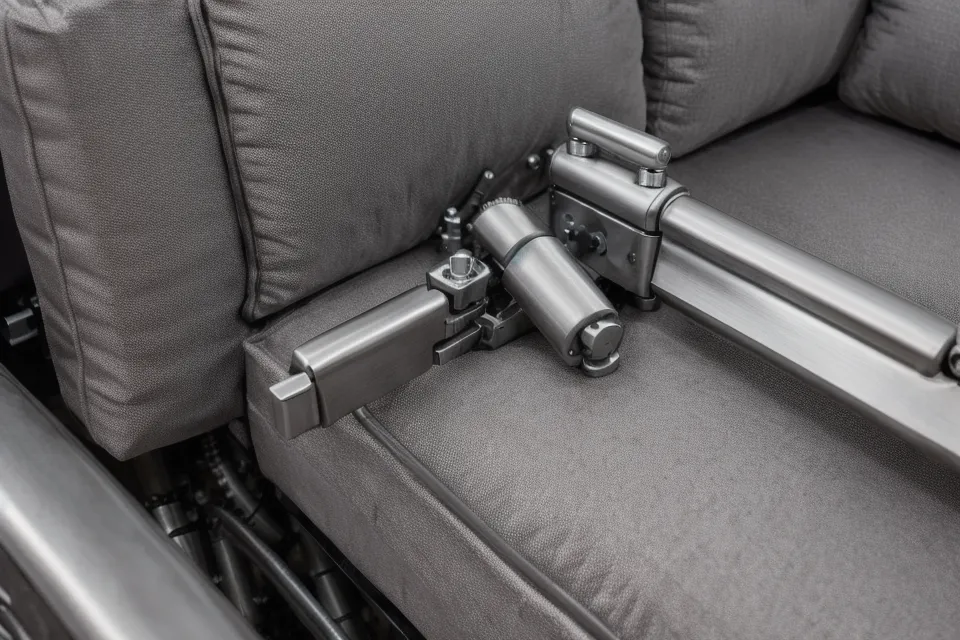
Here's the tradeoff nobody mentions in the showroom: a sleeper sofa is a machine, and machines need upkeep. A stationary chair like the Branch Ergonomic Chair gets set up once and mostly forgotten for years; a folding sleeper has hinges, tracks, and a mechanism that can catch on the upholstery if you ignore it. Every few months I check mine for exactly that, clearing crumbs out of the folding joints the same way I'd clear them out of a keyboard.
A reader named Maura Silliphant messaged me after a modular-sofa piece I'd written, once she'd already bought two sectional pieces off the back of it. She has a rescue dog that's harder on upholstery than any toddler I've personally tested against, and her experience with the hinge-and-cover routine matched mine almost exactly. That's really a washability and wear question more than a furniture-brand one, and it applies just as much to a rug in a family room as it does to a guest-room sofa.
None of this maintenance is dramatic, but it's real, and it's the honest cost of picking one multifunctional piece over two single-purpose ones. Armrest configuration on a chair is the detail nobody notices until it's set wrong, and it deserves its own breakdown rather than a footnote in a sofa review. Seat depth is another adjustment most people never touch until their knees start complaining, and that's its own separate rabbit hole too. The desk itself has its own height-range question worth getting right before you worry about the couch at all, and monitor height and eye-level positioning are right behind it on that list — real projects, worth their own page, just not the subject here. Dialing in recline tension on a task chair belongs on that same list.
So Which Anchor Piece Actually Earns Its Keep?
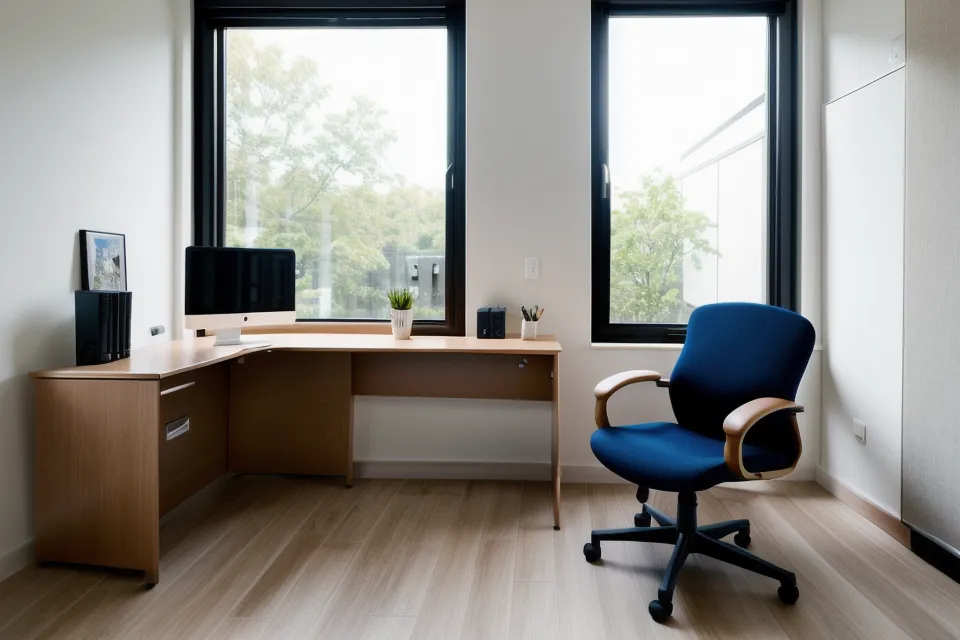
It depends entirely on what the room is actually for, which is the part most buying guides skip. A true guest room that hosts overnight visitors more than a handful of times a year, and also has to look credible on video calls the rest of the time, is exactly the case for one multifunctional anchor piece over two mediocre single-purpose ones. If you want the desk side of that room to read more like a design studio than a cubicle, something like the Best Design Within Reach office chairs lineup is worth a look, though it comes at a real premium over the direct-to-consumer brands. If the room is genuinely just an office that rarely hosts anyone overnight, skip the sleeper mechanism completely and pair a great stationary chair with a cheap, temporary air mattress you don't have to maintain at all.
Either way, the underlying math is the one that got me out of the replacement loop in the first place: buy the piece built to be checked on and maintained, not the one built to be replaced every season. On the sofa side, Joybird earns its keep if you'll actually use the sleeper function on a regular basis; if covers and cleanup matter more to your household than mattress feel, a Lovesac configuration is the one I'd point a reader toward instead. On the chair side, I still put my Herman Miller at the top of the list for anyone logging full days of video calls. The ergonomics and the warranty math both hold up. Start with whichever anchor takes the most daily abuse in your specific setup, chair first if you're at the desk more hours than you're on the sofa, sleeper first if guests are the more frequent event, and let the smaller pieces catch up around it.