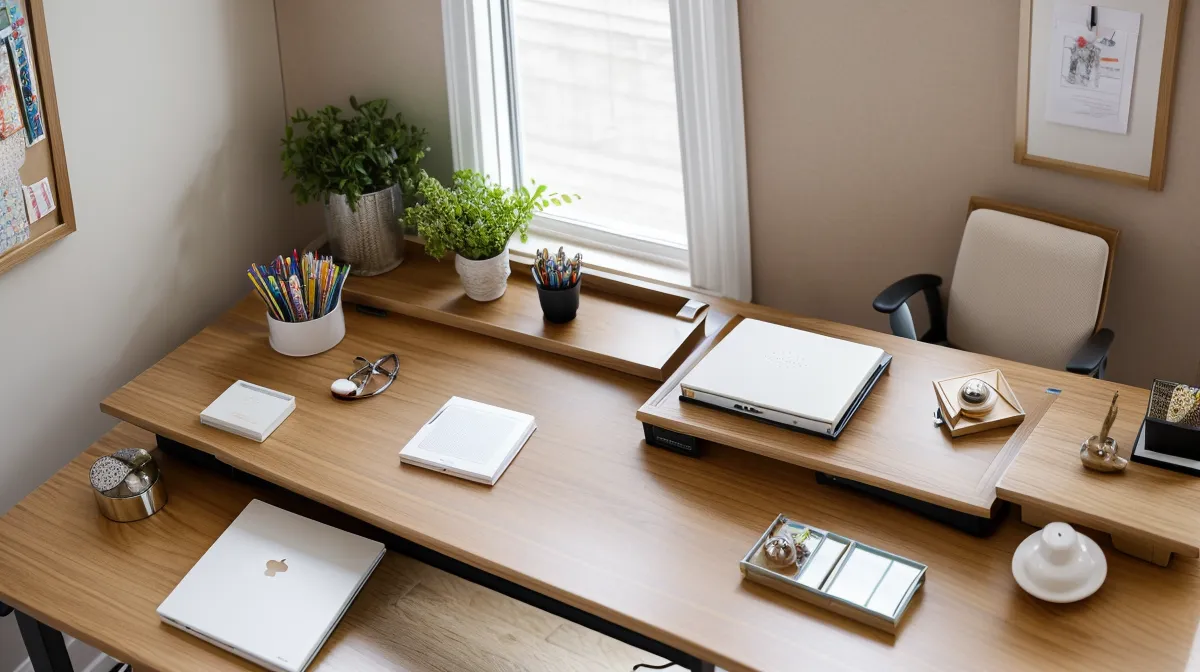
The Steelcase Gesture wants your body moving all day. The Herman Miller Embody wants you to settle into one good position and stay there. That's the real split between the two chairs everyone building out a serious home-office setup eventually asks about, and if you're picking ergonomic seating meant to survive years of remote-work essentials, not just look sharp in a product photo, that difference in philosophy matters more than the price tag ever will.
Quick disclosure before the comparison gets going: several of the links below are affiliate-tracked, meaning I earn a small commission if you buy through them, at no extra cost to you. Every chair mentioned here is one I've actually sat in for stretches long enough to form an opinion — some I kept, a couple I sent back — and none of this is a paid placement.
Two Very Different Ideas of Ergonomic Seating
Before I took chairs seriously, I spent a stretch stacking couch cushions under my laptop to fake a standing arrangement at my desk. The wobble alone should have told me it wasn't a real fix, and I ended up hunched worse than when I started. That's roughly when I stopped treating desk chairs as an afterthought and started comparing the two names that keep coming up in any serious home-office setup: the Steelcase Gesture and the Herman Miller Embody.
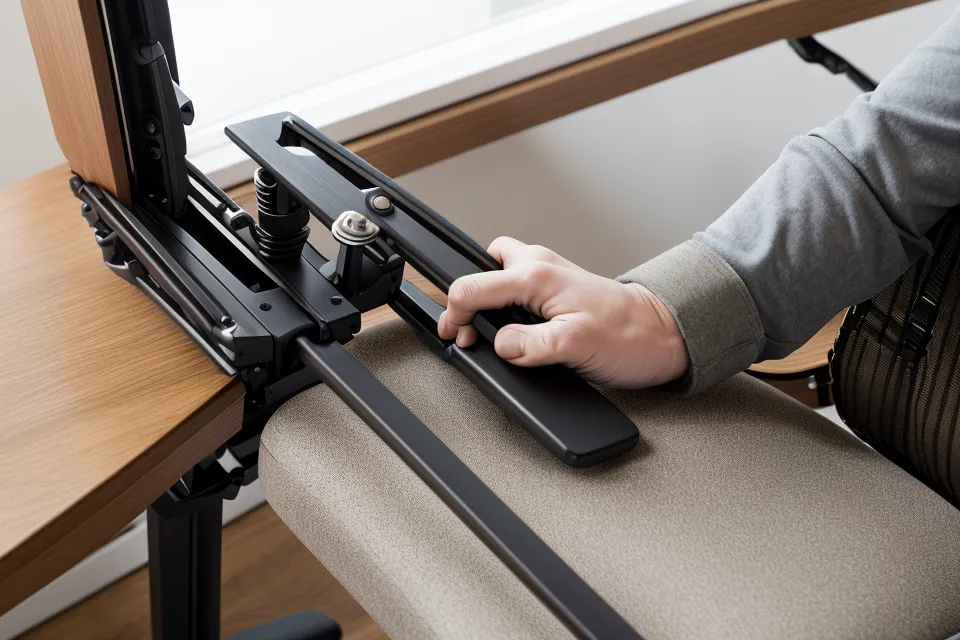
Neither chair is objectively better, no matter what the marketing pages imply. The Embody's pixelated lumbar support pads read your spine like a grid, but that only pays off once you've found a position and settled into it; how much lower-back support any given sitter actually needs is a longer question with its own answer elsewhere. The Gesture assumes you won't settle at all: it's built for people who cross their legs, twist toward a second monitor, and lean sideways for a tablet without warning. Seat depth is another variable in the same family: whether the front edge clears the back of your knees changes everything about a four-hour sit, and that's worth its own conversation rather than a paragraph here.
Which Chair Actually Backs Up Your Lower Back?
Steelcase calls its mechanism LiveBack, and it does something the Embody doesn't: it physically changes shape as you move, flexing along with your lumbar region instead of asking you to find one fixed sweet spot. The Embody's exoskeleton-style back support is precise once it's dialed in, but it's built around a mostly static sitter. I don't sit like that. I lean, I cross my legs, I reach back over the armrest for a water glass mid-call.
Here's where it gets philosophically interesting: the Gesture asks you to dial recline tension in by hand, turning a knob until the resistance matches your weight, while the Embody mostly self-tunes to your bodyweight the moment you sit down. The same underlying problem solved by two opposite design instincts. If you're trying to work out how much of your discomfort is the chair and how much is just a bad setup, How to Adjust Your Ergonomic Office Chair for Better Shoulder Support covers the adjustment side in more depth than I will here.
None of this is medical advice, and I'd rather say that plainly than dress it up. A physical therapist I know through the daycare pickup line, Patience Hollowell, reads most of what I write about posture before it goes anywhere near a headline, and she flags any sentence that starts sounding like a diagnosis instead of an opinion. If your back pain is real and ongoing, an actual physical therapist or doctor will get you further than any chair review, mine included.
Arms and Headrests Change More Than You'd Guess
Armrests sound like a minor spec until you're the one balancing a laptop on your knees mid-call. The Embody's arms move up, down, in, and out: solid coverage, but limited to those four directions. The Gesture's arms rotate a full 360 degrees and pivot more like an actual shoulder joint, which matters whether you're typing flat or angling toward a tablet. Exactly how many axes an armrest configuration needs before it's genuinely useful, versus just a spec-sheet number, is its own question, one better suited to a dedicated look at Steelcase's remote-work lineup than a detour here.
Headrests are the bigger gap. The Embody doesn't ship with one; Herman Miller expects you to bolt on a third-party option, and most of them feel like exactly that. The Gesture's integrated headrest turned out to matter more than I expected. It was during a deadline sprint that ran past 7 PM one evening that I noticed my neck had quietly unclenched itself sometime in the last hour, without me doing anything deliberate about it.
Monitor height plays into this too. Whichever chair keeps your eyes level with the top third of the screen, without you craning forward, wins that particular battle, and that's a wider setup question than either chair alone can answer.
Heat, Fabric, and Living With a Toddler Nearby
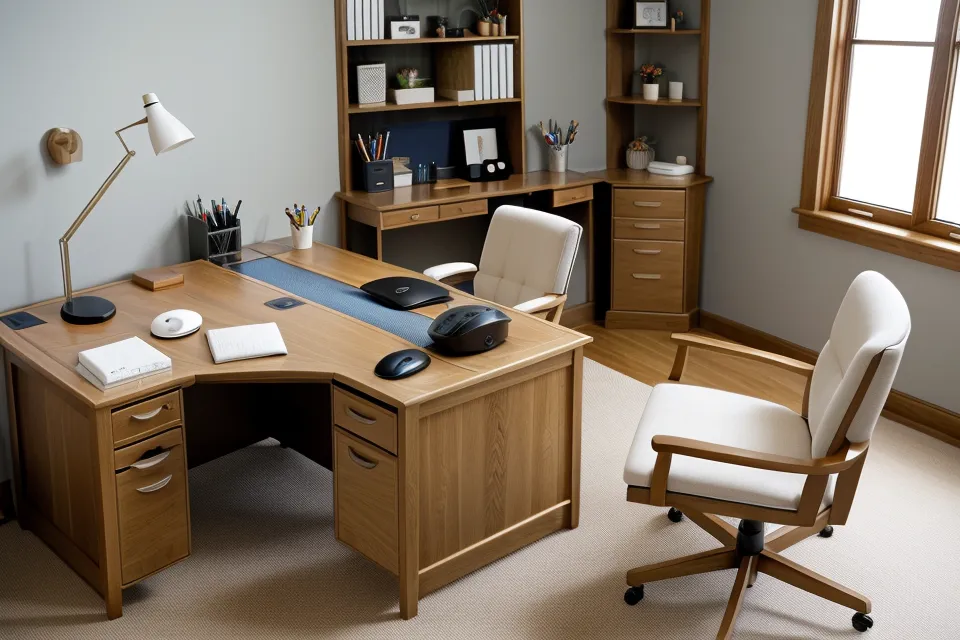
There's a specific smell a brand-new desk frame carries for a little while: a flat metallic note before it disappears under sticky notes, spare cables, and the general clutter of an actual workday. Chairs have their own version of that honeymoon period, and it fades fast once you're using one for real work instead of admiring it in a showroom. Temperature is the more practical concern once that fades: the Embody's mesh-like Sync fabric stays noticeably cooler through a warm afternoon, while the Gesture's upholstered foam runs warmer, worth knowing if your office doesn't have great airflow. Fabric durability tips the other way. The Gesture's weave has held up better against the general chaos of a kid nearby than the Embody's more delicate-looking pixelated surface.
Price is where most people stall, and it's a fair place to stall. Whether a chair is worth the up-front number comes down to a durability-versus-price question that deserves its own full breakdown rather than a paragraph buried in a comparison piece, but the short version is that a twelve-year warranty changes the math considerably once you've replaced the same cheap starter chair for the third time. If the price of the "big two" still makes you flinch, the Branch Ergonomic Chair covers most of the adjustments people actually use for roughly half the cost, backed by a seven-year warranty that's generous for its price tier. For the aesthetic-minded, Design Within Reach carries higher-end versions of these same chair families if you'd rather see them in a design-forward showroom context, though lead times on upholstered pieces there can run longer than the site estimates.
The same durability question turns up in stranger corners of a house. A rug's washability rating either means it goes in a normal machine or just that it wipes clean. A standing desk's height range either covers a six-footer and someone considerably shorter, or it doesn't. A couch cushion either bounces back or stays flattened for good. Furniture durability rarely announces itself on day one. It shows up well after the first sit, which is exactly why glossy first-look photos are the least useful part of any review.
So Which One Actually Wins the Workday?
Neither chair wins outright, and anyone who tells you it does is selling something harder than I am. Choose the Gesture when your workday looks like mine: constant repositioning, a tablet in one hand, a call every hour that has you leaning six different directions before lunch. Choose the Embody when your work runs closer to stationary: writing, coding, anything where you find one good position and hold it for long stretches without much reason to move.
A warranty length is one of the more honest durability signals a furniture company can give you, mostly because it's the one claim they'd actually have to pay out on if they were bluffing. You can read more about how adjustment ranges, weight capacity, and warranty terms stack up across brands in Ergonomic Office Chairs Compared: Adjustments, Weight Capacity, and Warranty. On that front, the Gesture and the Embody are close enough that warranty length shouldn't be the deciding factor between just these two.
I'd buy the Gesture again without hesitating, but that's because my days are a mess of tablets, monitors, and half-finished calls, not because it's the objectively superior machine. Whichever one matches how you actually sit, not how you wish you sat, between the Herman Miller Embody and the Steelcase Gesture is the one that'll still be holding your back together well after the new-chair feeling wears off.