
Twelve years. That's how long Herman Miller stands behind the gas cylinder and casters on the Aeron — longer than the combined lifespan of the three flimsy chairs I dragged home from clearance racks before it. None of them ever delivered real sciatica relief; by Friday afternoon a hot line still ran from my hip down to my calf no matter how much I fidgeted. Ergonomic seating sounded like marketing copy until the pain forced an actual home office setup overhaul, checked against my own spine and budget instead of a showroom pitch.
Quick disclosure up front: a few links below go to chair and furniture brands I've actually tested at my own desk, and if you buy through one, I earn a small commission at no extra cost to you. I'm not a physical therapist or an ergonomics specialist — just someone who burned through too many disposable chairs before treating one as furniture durability worth paying for, the same way I've had to rethink other remote-work health habits since going fully remote.
The Padding Trap That Fooled Me for Years
The La-Z-Boy I owned for two years looked like a throne stuffed with marshmallows, and for the first twenty minutes of any given morning, it felt like one too. Then the foam started to give. Once the cushion compresses, your pelvis tips back and your lower back rounds into a slump — not a position sciatica responds well to. Nobody tells you that plush and supportive are almost opposite qualities in a chair; showroom softness and all-day pelvic support pull in different directions entirely.
For a stretch last year, my fix was pharmaceutical rather than structural. I'd take ibuprofen most Thursdays and Fridays, treating the tight band across my shoulders like something to dull rather than solve. It got me through the call, but it did nothing for the leg pain, and by the following Monday the same knot was back in the same place — which told me the chair was the actual problem, not my tolerance for discomfort.

Why Sharing a Desk Undoes Every Setting You Dial In
Nobody warns you how much sciatica management depends on nobody else touching your settings. My partner and I trade the desk depending on whose call schedule is worse that day, and every swap resets the chair to whatever suited them last. That matters more than it sounds when a sciatic nerve is already irritated, since a lumbar height that's even slightly off can turn into real discomfort by early afternoon, and re-finding your own settings from scratch every Monday gets old fast.
Armrest height turned into its own negotiation. My partner sits taller than I do, so every time they finish a call, the armrests are locked wherever fit them. I've gotten fast at resetting mine — there's a small, satisfying click when the tab catches the next notch and the armrest actually holds instead of sagging back down — but it's one more variable in a setup that's supposed to stay dialed in and left alone. If you're trying to keep a shared office from turning into a daily reset button, I wrote separately about Best Home Office Storage Cabinets for Organizing a Shared Space, which at least keeps the rest of the room out of the argument.
Testing the Herman Miller Aeron After Years of Disposable Chairs
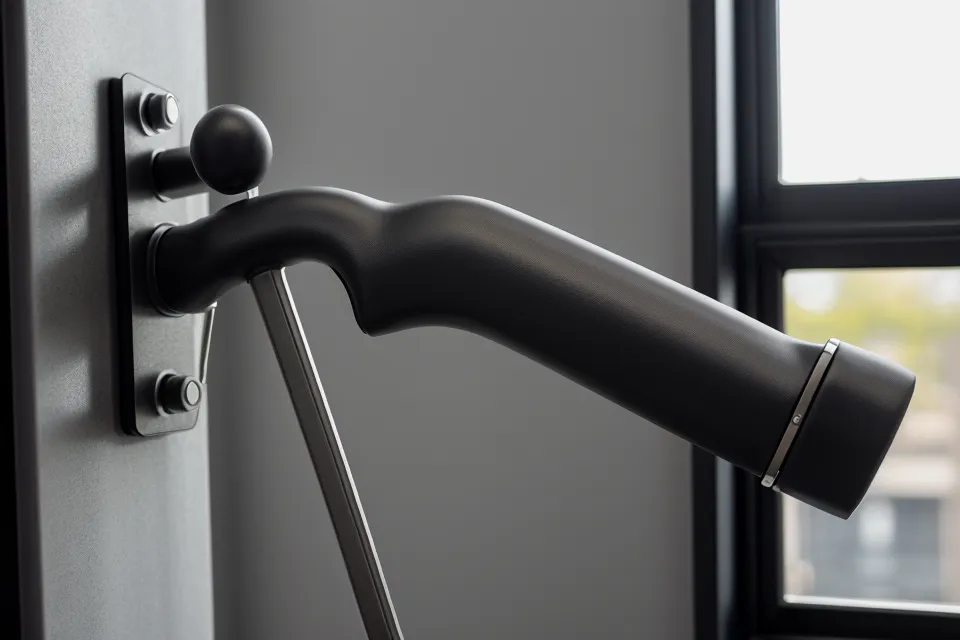
By late in the year I was done with the replace-it-every-winter cycle, so I actually sat in a Herman Miller Aeron. The price made me flinch — it's a strange jump from a decade of budget specials to something that costs as much as a used car's down payment. Then I ran the math instead of staring at the invoice: that twelve-year warranty covers the exact parts that die first on a cheap chair, the gas cylinder and the casters, so the real per-year cost looked a lot less alarming than the sticker.
A warranty stretched over twelve years works as a durability signal in itself — a company doesn't back a part that long unless it expects the part to actually survive that long. Run the math on a decade of use instead of the sticker price, and the real cost gap between a cheap chair and a serious one shrinks a lot faster than the invoice suggests. Seat depth mattered almost as much as the lumbar piece for me: a seat pan that runs too deep cuts into the back of your knees and chokes off circulation, which compounds sciatica symptoms instead of easing them, so the Aeron's adjustable pan earned its keep before I'd even finished a full workday in it.
Steelcase or Branch: Which One Actually Fits?
The Aeron isn't the only serious option, and my neighbor two doors down, Jacinda, is the reason I actually compared warranty terms instead of assuming they'd match — she treats a retailer's return window like a competitive sport, and she wasn't about to let me buy a four-figure chair without reading the fine print first. The Steelcase Gesture carries the same twelve-year warranty as the Aeron, and its LiveBack mechanism flexes with your spine more than the more rigid frames I'd tried before, which suits anyone who shifts position constantly through the day.
If a four-figure chair isn't realistic right now, the Branch Ergonomic Chair is a reasonable middle ground — its seven-year warranty still beats the one-year policy you get from most big-box retailers by a wide margin, even if the lumbar adjustment feels less precise than the Aeron's. I wrote a longer take on that trade-off in Why Branch Ergonomic Chairs Are Best for Small Home Office Budgets if you want the full comparison. None of this replaces medical guidance, though — if your leg is going numb or the pain is keeping you up at night, that's a conversation for your doctor or a physical therapist, not a furniture blog.
Where Should Lumbar Support Actually Sit?
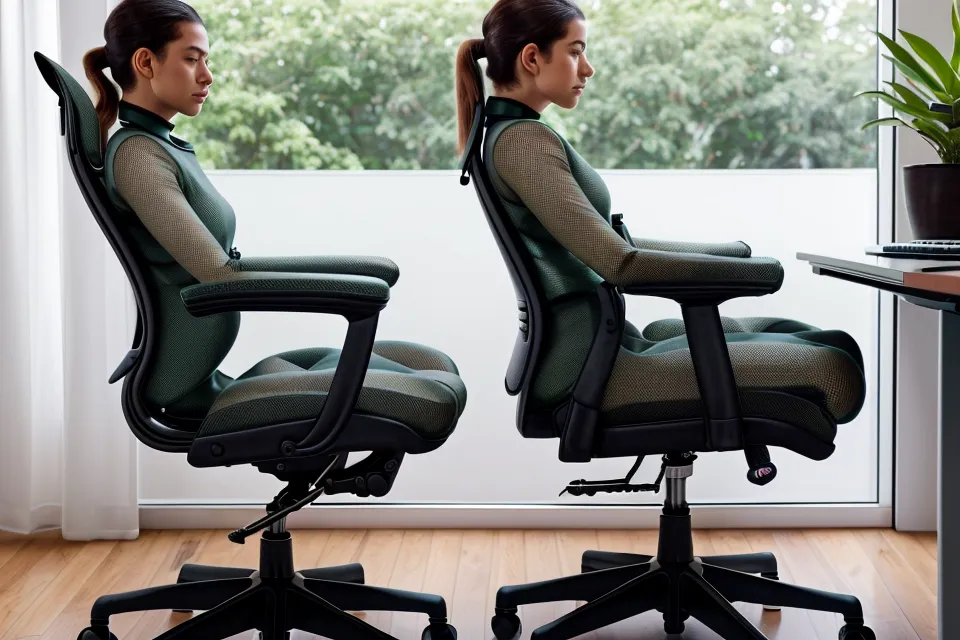
A reader named Destiny Hawkins emailed me a string of follow-up questions last spring before she'd commit to a chair, and the one about lumbar placement is the one I still get asked most. The short version: lumbar support should align with the natural inward curve of your lower back — the lumbar lordosis — sitting slightly above your belt line, not up in the mid-back and not down near the tailbone. Get that placement wrong by even an inch and the support does almost nothing, no matter how firm or expensive the cushion behind it is.
This is also where monitor height and desk height start compounding each other — if your screen sits too low, you round your shoulders forward to see it, which undoes whatever the lumbar support just fixed, and if your desk only adjusts across a narrow standing-desk height range, you end up compensating with chair height instead of desk height. I didn't take either seriously until I fixed both at once; for the desk side of it, I wrote a longer breakdown in How to Choose the Best Standing Desk for Home Office Use.
Six Weeks In, What Actually Changed
Six weeks of sitting in the Aeron every day is roughly how long it took before I stopped thinking about my chair at all, which turned out to be the only metric that mattered. I noticed it almost by accident — still at my desk finishing client notes well past when I'd normally have logged off, and when I finally stood up, my neck wasn't the clenched, wound-up knot it usually was by that point in a long day. That absence of the usual tightness said more than any spec sheet could.
Tension calibration is the setting most people skip entirely, and it's worth the ten minutes. The recline resistance has to match your actual body weight and how far back you lean, or the chair either fights you upright or dumps you backward every time you shift — the Aeron took about a workweek for me to dial in properly, but once the tension matched how I actually sit, I could get back to my settings in under a minute even after my toddler had spun the chair around as a fort.

Furniture Durability: A Chair That Doesn't Need Replacing Every Year
There's a washable rug under the chair mat now too, chosen the same way — for how it survives real use rather than how it photographs, since a rug with a decent washability rating outlasts a pretty one within the first spilled coffee.

Whether you land on the top-tier support of a Herman Miller or the more reasonable price of a Branch, the underlying goal is the same: a chair that keeps your pelvis level and lets that nerve pathway down your leg actually rest instead of staying pinched all day. Furniture durability matters here more than in almost any other room purchase, because you're testing it eight hours a day instead of admiring it from the couch. If you're rethinking the rest of the house for the same reasons, I put together a similar breakdown of Stylish and Durable Modular Sofas for Small Living Room Spaces — the workday chair matters, but so does what you collapse into once it's over.
The lesson that actually stuck, after all the trial and error: judge a chair by its warranty math and where the lumbar curve sits, not by how good the first five minutes feel in a showroom. Comfort on day one is easy to fake. Comfort on day two hundred is not.