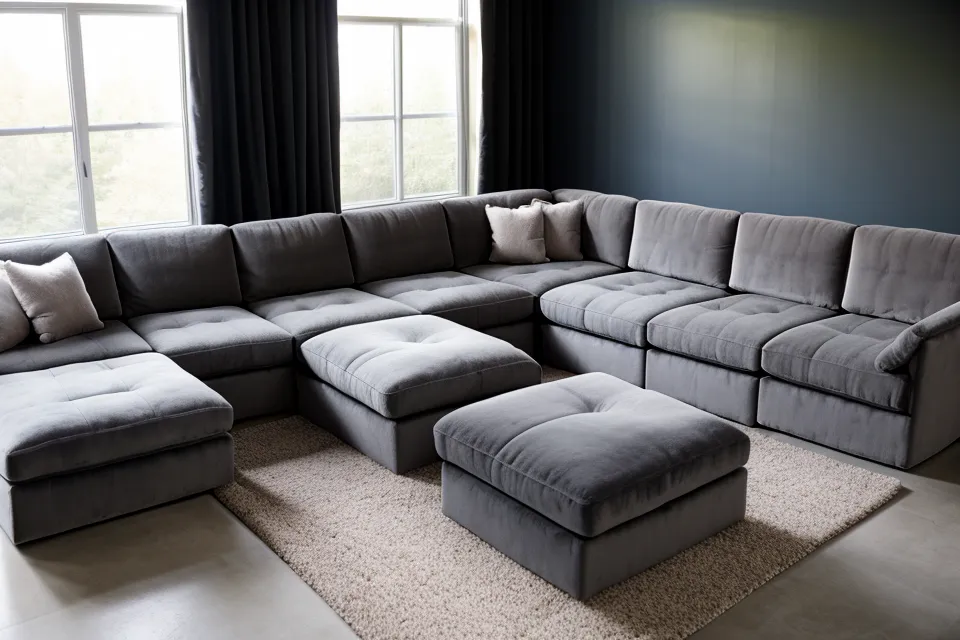
A Lovesac Sactional built in the Deep Movie Lounger configuration has no exposed frame anywhere — no wooden foot, no metal leg, nothing at a toddler's forehead height to crack a skull on. That's the kind of detail that actually matters when you're picking modular seating for a house with a toddler loose in it, more than the fabric swatches or the color chart, and it's why this piece walks through actual configurations instead of just admiring the concept from a showroom floor.
Quick disclosure before the configurations: the furniture and chair links here are affiliate links, and I earn a commission if you buy through one, at no extra cost to you. The Lovesac Sactional covered in this piece is something I've lived with through actual toddler chaos, not a press sample I photographed once and shipped back. I'm not a designer or an ergonomics specialist — just a remote worker who got tired of replacing furniture every couple of years and started actually shopping for toddler-proof furniture instead of guessing.
The Warranty Math Behind a Toddler-Proof Sofa
Buying a Herman Miller for the home office made the same case twice: a twelve-year warranty on the parts that actually fail turns a scary sticker price into a cost-per-year problem, and cost-per-year is a math problem I can solve. A sofa deserves the same treatment. If a chair built to survive a decade of full workdays can also stay cool through a humid North Carolina summer, there's no good reason to keep buying a sofa built to look good in photos for exactly one season — that's the same ergonomic living-room logic applied to a couch instead of a desk chair.
That's the logic that pointed me toward the modular design behind the Lovesac Sactional. It isn't one couch — it's a set of individual pieces, so a toddler destroying one armrest means replacing that piece, not the whole sectional. The Branch chair backs its home-office lineup with a solid seven-year warranty, generous for its price tier, but Lovesac backs its Sactional inserts with a lifetime guarantee. That's the kind of arithmetic that wins out over a full childhood of couch cushions absorbing snacks.

Configuring the Deep Movie Lounger for Rainy-Day Containment
Reconfiguring the standard four-seat, five-side L-shape into what Lovesac calls the Deep Movie Lounger turns the whole sectional into one wide, cushioned pit — drop the back cushions to floor level and the footprint becomes usable floor space instead of a couch with a coffee-table moat around it. In a house with a toddler, that configuration works as a padded safe zone on the days when going outside isn't an option: no sharp table corner, no gap between cushions to wedge a leg into, and everyone still fits.
Where the L-shape earns its keep for everyday use, the Deep configuration is really a temporary mode — you break it back down once the weather clears, since the extra depth eats floor space you need for anything else. What it's actually good for is containment: a toddler gets a snack zone on one side of the pit while the far side stays clean enough for an adult to sit on without regretting it. That's a long way from a fixed-back chair, where if one part is uncomfortable the whole seat is uncomfortable. If you've read up on how to adjust an ergonomic office chair for better shoulder support, the same micro-adjustment logic carries over to a living room layout — small changes in configuration change how the whole space actually functions.
Building a Fortress Layout for High-Energy Afternoons
Once a toddler's energy outpaces a full pot of coffee, the Fortress configuration earns its keep instead: a long, straight run of the sectional with the corner and wedge pieces turned to wall off a play area on the rug rather than framing a lounging pit. This is where covers really get tested — the Steelcase chair in my office covers its mechanical parts, gas cylinder and casters included, under a twelve-year warranty, but the Sactional pieces in a Fortress layout are absorbing direct physical impact: climbing, jumping, the occasional body-check into an armrest.
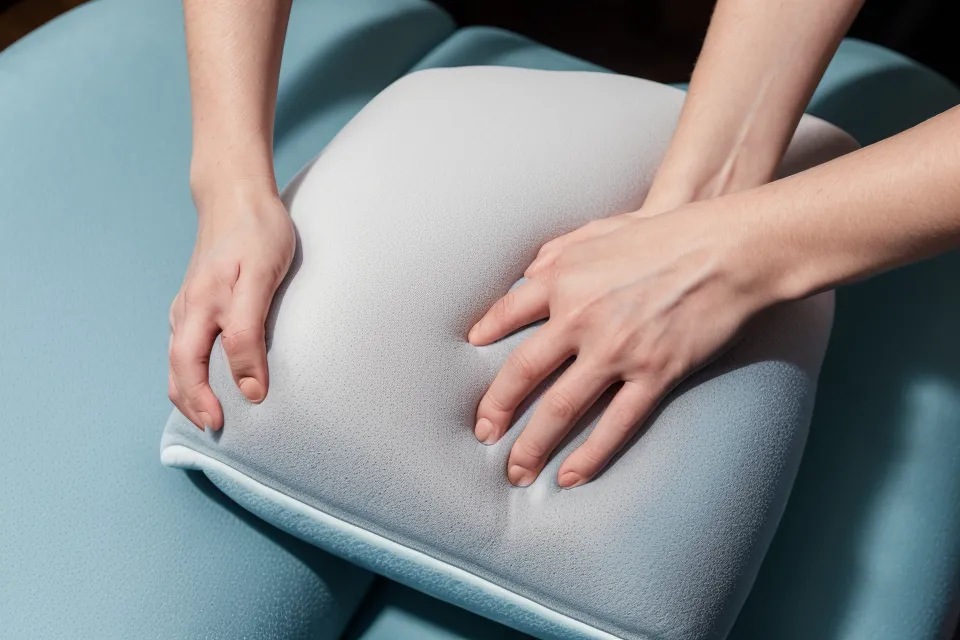
High-density fabric covers hold up well against that kind of friction — resistant to the constant scuffing a toddler treats as a sport. The tradeoff nobody mentions upfront: the denser the weave, the harder it fights you when you're stretching it back over the foam insert. Getting a high-density cover reinstalled is genuinely a full-body effort, closer to wrestling a fitted sheet onto a mattress than swapping a cushion cover. You'll win. You'll also be sweating by the time you do.
Which Fabric Cover Actually Survives a Toddler?
Washable is the word every modular sofa brand puts on the box, but the real test is what happens after the third wash, not the first. The Lovesac covers go into a regular machine and line-dry, which matters in North Carolina humidity, since anything that can't breathe while drying just stays damp for days. There's a faint new-foam smell the first time you unzip a fresh cover out of its packaging, gone by the second wash — a small thing, but it's the closest this couch gets to a new-furniture feeling.
The honest complication is the inverse relationship between stain resistance and stretch: the thicker and more toddler-proof a fabric is, the harder it fights you when you're re-stretching it over the foam, and no fabric scores well on both. The Corded Velvet and Padded Velvet options land in the middle of that tradeoff — they hide spills and crumbs well and still have enough give that reinstalling a cover doesn't cost you a fingernail. I landed on that answer during a walk around Shelley Lake greenway, thinking it through the way I'd think through a chair's warranty math — not the most scenic subject matter, but that's where it clicked.
The Sactional Costs More Than It Looks Like It Should
A friend who plays recreational pickleball at Millbrook Exchange Park most weekends asked me last month whether the Sactional was worth it before her toddler turns two, and the honest answer is the one I use for my own house: managing a home-office lifestyle and a toddler under the same roof forces the same warranty question onto every big purchase. That's why I went through the same exercise comparing ergonomic office chairs for their weight capacity and warranty before treating the Sactional as a long-term asset instead of a couch-shaped purchase.
Design Within Reach carries genuine licensed pieces that are beautiful in a way a Sactional never will be, but living with a toddler around museum-quality furniture is its own kind of stress — you're managing the kid and the furniture at the same time. A Sactional reads more like a tool than a showpiece: built to be used hard, rearranged constantly, and hosed off when it needs to be. None of this is medical advice, for what it's worth — if your back still hurts no matter how the sectional is arranged, that's a physical therapist's question, not a furniture-configuration one, and it might have more to do with the chair you sat in for eight hours beforehand than the couch you collapsed onto after.
Is the Sactional Worth Building a Living Room Around?
Get enough family into a room arranged around a Sactional in a U-shape and something changes: nobody's hovering with a napkin, nobody's protecting the good chair, and the furniture stops being something anyone has to think about. That's the actual thing you're paying for — not the configuration name, not the fabric swatch, just not having to manage the couch anymore.
Whether you're pricing a Steelcase for the desk or a Sactional for the den, the underlying question is the same: are you buying something with an expiration date, or something you can keep reconfiguring instead of replacing. Starting with a four-seat Lovesac setup and expanding later is the lower-risk way into the whole system — just bring in a second person the first day you have to wrestle the covers back on. Your thumbs will thank you.