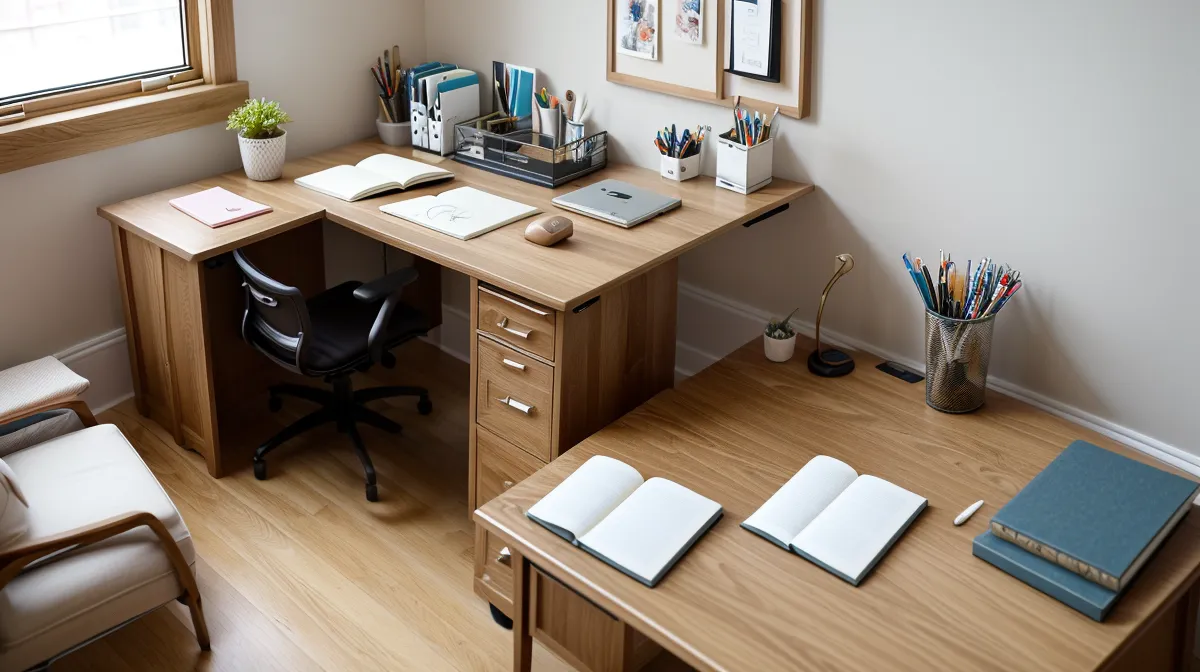
Twenty-nine inches is the fixed height on most Frontgate-style executive desks, and it's also the exact number that decides whether your shoulders lock up by the middle of the afternoon or stay loose through a full day of typing at an executive home office desk. It sounds like a footnote until you're the one reaching up toward a keyboard that sits an inch too high, over and over, for months. That one measurement determines the whole case for or against a heavy executive desk.
Quick disclosure before any of that: the desk and chair links below are affiliate-tracked, so if you buy through one, I earn a small commission at no extra cost to you. Nothing here is a paid placement — I've sat in, measured, or dug into the specs on every piece mentioned, mostly because I got tired of guessing.
Why an Executive Home Office Desk Has to Earn Its Weight
Particle board doesn't survive a humid climate, and North Carolina is a humid climate for a solid stretch of the year. Swelling, warping, drawers that stick — that's the cheap-desk experience, not a one-off. Frontgate's executive lineup gets attention here for the opposite reason: solid-wood construction that doesn't visibly react every time the seasons change, which matters more in a Raleigh remote-work setup than the styling ever does.
The tell is in the drawers. Close one on a solid-wood executive desk and you get a deep, muffled sound, wood meeting wood — nothing like the tinny rattle of the laminate desks a lot of remote workers cycle through early on. That sound isn't just aesthetic. It's usually a decent proxy for how the joinery was built, and joinery is what fails first on cheap furniture.

The Size Trap: Depth, Height, and the Room You Actually Have
Executive desks are built for surface area, and that's the trap. A 72-inch top makes sense if you're signing contracts in a corner office; in a converted bedroom or a shared room at home, that same footprint eats the boundary between working and living. Before measuring anything else, measure the room, not the desk — figure out how much floor space you can give up before the desk starts running the whole layout.
Height is the second trap, and it's less forgiving. Most executive desks land at a fixed 29 to 30 inches, with zero adjustment range — nothing like the height range built into an actual standing desk, where you can dial in a number that fits your own arm length. If that fixed height doesn't match your chair and your arm length, you end up reaching up to the keyboard all day, and a locked shoulder is the eventual bill. None of this replaces a real conversation with a doctor or physical therapist if you're already dealing with chronic pain — furniture is a variable, not a fix.
The 30-Inch Depth Standard and Whether It Holds Up
Thirty inches is the other standard number worth knowing. That's the typical depth on an executive desk, deep enough to keep a large monitor a comfortable distance away instead of practically touching your face. The depth is genuinely good for eye strain. The catch is that a chair needs enough clearance to maneuver in that same footprint, which is where a lot of buyers get the desk right and the chair wrong. Pieces from Design Within Reach tend to solve this — sleek enough not to fight the visual weight of a heavy desk, without turning the room into a furniture showroom. Get the chair's seat-depth adjustment dialed in too, separate topic, but it's the difference between that desk depth working for you or against you.
Reading a Frontgate Desk for Humidity and Wood Movement
Older homes in Raleigh tend to have hardwood floors that were never perfectly level to begin with, and a heavy desk shows that immediately. Mine announces every uneven board the second the casters roll off the wood and catch the edge of the office mat with a low thud. I spent a full Saturday afternoon trying to level a solid mahogany desk using nothing but a stack of old business cards, which is a humbling way to realize your professional setup is being propped up by your own networking contacts.
Solid wood keeps reacting to the room long after delivery day. Summer humidity swells it, winter dries it back out, and drawers that glide easily in January can stick by midsummer. That's wood expansion and contraction, not a defect, and a well-built executive desk is engineered to absorb it without the joinery failing. If a heavier, more traditional style fits the room better than Frontgate's take, my notes on Best Ballard Designs Desks for Traditional Home Office Styles cover that angle.

The Chair Compatibility Problem
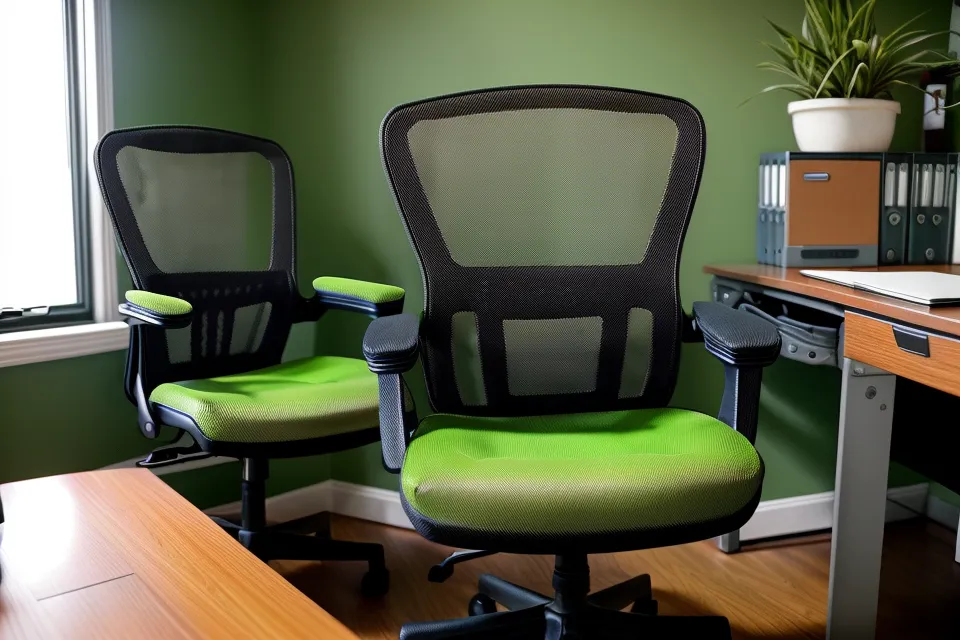
A great desk with the wrong chair still fails. Most executive desks include a lap drawer sitting exactly where your knees and your chair's armrests need to go, so the desk's specs are only half the equation. Check the clearance under the desk before anything else, because a chair that can't tuck all the way in forces you to lean forward through long video calls, which strains your neck the same way every time. Armrest configuration matters here too — fixed armrests that hit the drawer are a dealbreaker no spec sheet mentions.
Once the clearance checks out, warranty length becomes the fastest gut-check for whether a company actually trusts its own hardware. The Herman Miller Aeron and Embody carry a twelve-year warranty that covers the parts that actually fail — gas cylinder, mesh, casters — and the Steelcase Gesture and Leap match that same twelve-year window at a slightly lower price. On a tighter budget, the Branch Ergonomic Chair drops to a seven-year warranty and a noticeably lower entry price, which still beats most big-box chairs' one-year-and-good-luck coverage. Lumbar support and recline tension are both worth dialing in separately once you've settled on a chair — different adjustments, different learning curve.
Building an Ergonomic Workspace That Holds Its Shape With Kids Around
A desk that wobbles every time a kid runs past never quite reads as an office — it reads as a suggestion. A heavier, properly leveled desk acts like an anchor for the whole room, which changes how the space gets treated by everyone else living in it, not just the person working at it.
Durability matters more once the room doubles as a family space. I've watched a recliner get turned into a slide, so I'm not naive about what solid finishes are up against — they hold up better than thin veneer, but nothing is entirely kid-proof, including the desk. If the room also needs a couch that survives that kind of use, the modular Lovesac setup is worth a look, and the same logic applies to whatever rug ends up under all of it — washability rating matters a lot more than pile texture once there's a juice box in the room.
Signs Your Setup Is Actually Working
The clearest test isn't a spec sheet, it's a long stretch of actual work. One straight morning writing block, from around eight until well past mid-morning, passed without a single shift in the seat or a reach back to rub a shoulder. That's the outcome the depth, the height, and the chair pairing are all supposed to add up to.
For what it's worth, the stability-ball phase came before any of this — the whole "active sitting" idea sounded reasonable until I spent most calls quietly scooting forward to keep from sliding off it. It solved nothing and added its own kind of fidgeting. A monitor set at the wrong eye level undoes a lot of this progress too, which is really its own topic — check that separately once you've got the Best Ergonomic Monitor Arms for Dual Screen Home Office Setups dialed in alongside the desk.
The Bottom Line on an Executive Home Office Desk
Measure three times before buying once. Check how your chair interacts with the desk's fixed height, confirm the 30-inch depth actually fits your monitor distance, and don't buy the aesthetic before you've checked the clearance underneath it. If the heavy-wood executive look doesn't pair with your ergonomic chair, the seating angle covered in Best Design Within Reach Office Chairs for a Modern Home Workspace is worth reading before you commit to a Frontgate-style piece.

A good executive desk should function like infrastructure, not decor — the thing that stays steady when the workload gets heavy, not the thing you're still fussing with months later. Getting the height, depth, and chair pairing right the first time beats replacing the wrong combination twice.