
One humid Friday afternoon in July, right here in my home office in Raleigh, I realized that despite owning what everyone calls a 'holy grail' chair, my shoulders were still creeping toward my ears during a back-to-back strategy call marathon. You know that feeling—the one where your neck feels like it’s being compressed by an invisible hand, and you’re suddenly very aware of every single minute you’ve spent staring at a Google Doc. It was a wake-up call. I had spent the better part of three years churning through those 'disposable' office chairs from big-box stores, the kind that look great for three months and then start to creak like a haunted house every time you shift your weight.
I finally caved and invested in the Steelcase Leap V2 around Thanksgiving last year. I thought that would be the end of it. I figured for that kind of investment, the chair would solve every problem including my kid’s snack tornadoes in the living room. But after a few weeks, I realized that a great chair is just the foundation, not the finished product. It’s like buying a high-end kitchen appliance; it’s fantastic, but you still need the right attachments to make it work for your specific routine. I’m not a designer or an ergonomics specialist—just a remote worker who is tired of my body feeling like a question mark by 5:00 PM—so these are my hands-on findings on what actually makes this chair better and what’s just marketing noise.
The Great Wheel Upgrade: From Thump-Thump to Buttery Glide
The first thing I noticed after about a month of daily use was the friction. My home office has original hardwood floors, and the standard casters that come with the Leap V2 are... fine. They’re functional. But they have this rhythmic 'thump-thump' every time they hit the gaps in the floorboards. The standard caster diameter is 2.5 inches, which is industry standard, but on a hard surface, they feel a bit like plastic grinding against wood. It wasn't just the noise; it was the effort. I felt like I was fighting the chair every time I wanted to scoot closer to my monitor.
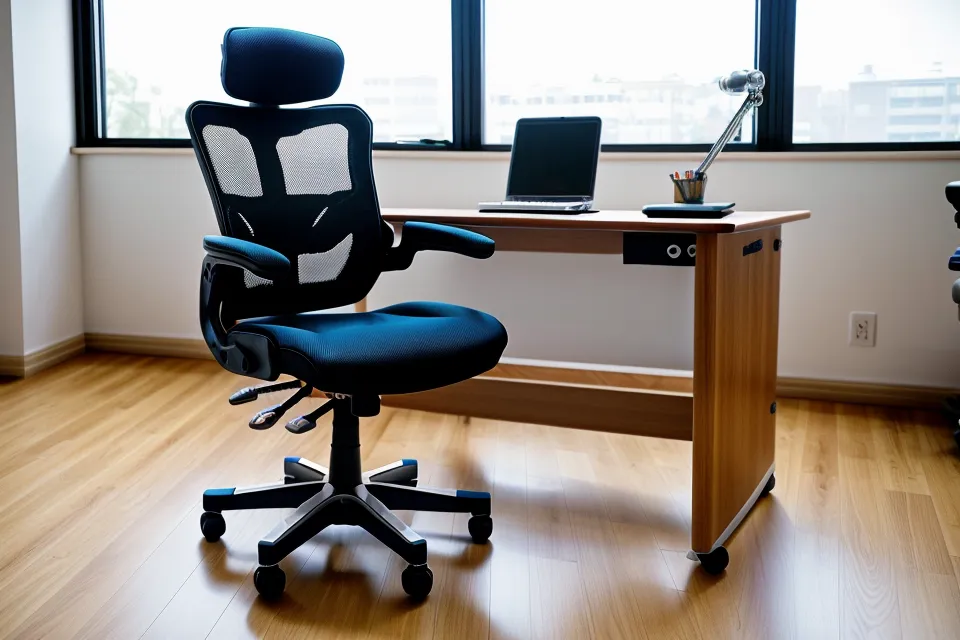
By early spring, I swapped them out for a set of rollerblade-style polyurethane wheels. If you’ve never done this, it’s the single most satisfying twenty-minute project you can do for your sanity. The difference is sensory. There is a silent, buttery glide of polyurethane wheels across the floor compared to that old rhythmic plastic clatter. It changed the entire vibe of the room. Suddenly, moving from my desk to the filing cabinet didn't feel like a chore. It’s a small thing, but when you’re in the 'thing you sit in for the full workday' for eight or nine hours, those micro-stresses of fighting your furniture add up. Just be sure to check with a professional or a physical therapist if you find yourself gliding too much—sometimes a little resistance is actually better for your core stability if you have lower back issues.
The Cylinder and Seat Depth: Finding Your 'Sweet Spot'
I spent a lot of time in the first few months tweaking the actual mechanics of the chair. The Leap V2 is famous for its 'LiveBack' technology, which is designed to change shape as your spine moves. It’s not a static piece of plastic; it’s supposed to be an extension of your back. But that only works if you’re positioned correctly. I’m about average height, but I have a long torso, so I had to get really familiar with the adjustments. The chair has a standard pneumatic cylinder travel range of 5 inches, which is plenty for most desks, but I found that even a half-inch difference in height changed whether my wrists felt strained by the end of a writing sprint.
Then there’s the seat depth. The Leap V2 offers a seat depth adjustment range of about 3 inches. I’ve found that many people just leave this where it was when the chair arrived. That’s a mistake. It’s like wearing a pair of jeans that are too tight in the knees—you can move, but it’s not comfortable. I spent a few days in early summer sliding that seat pan back and forth until I found the spot where my thighs were supported without the edge of the seat digging into the back of my knees. If you’re looking for something that handles these adjustments even more intuitively, you might find my Steelcase Think Review: A High Performance Chair for Remote Workers helpful for comparison, as that chair takes a slightly more 'weight-activated' approach to ergonomics.
The Headrest Dilemma: Why More Isn't Always Better
This is where things get controversial in the ergonomic world. When I first got the Leap, I was convinced I needed a headrest. My neck always felt tired by mid-afternoon, and I figured a dedicated rest was the answer. I started looking at third-party options because the factory-installed Steelcase headrest is notoriously difficult to add after the fact. However, I noticed something interesting after about six months of daily use: adding a rigid aftermarket headrest to the Leap V2 often disrupts the chair’s signature live-back support system.
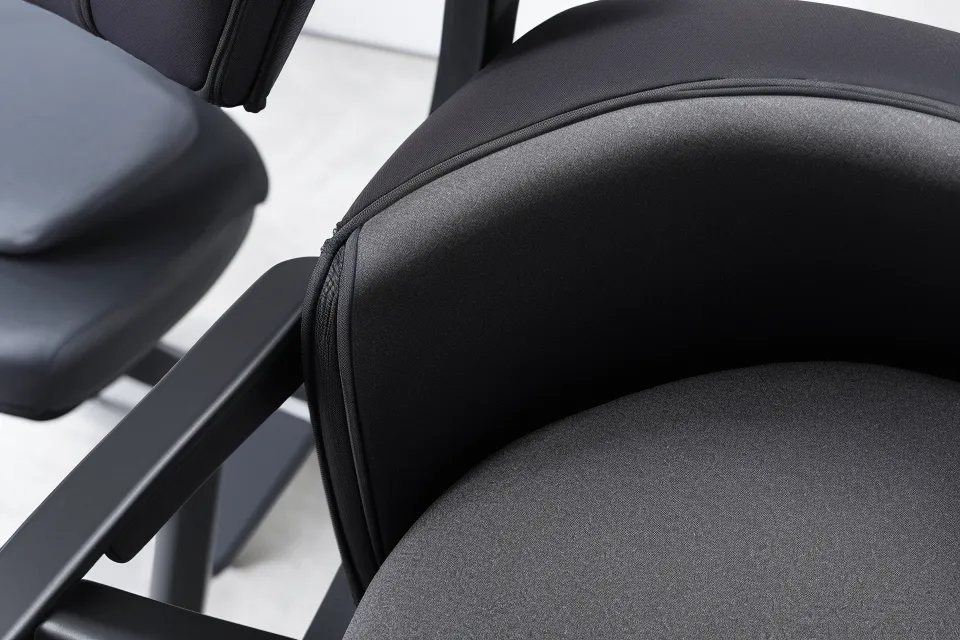
The beauty of the Leap is that the top of the backrest flexes backward when you lean. When you bolt a rigid, non-flexible headrest to that frame, you’re essentially creating a pivot point that can force a hunched posture rather than fixing it. It’s counter-intuitive. You think you’re supporting your neck, but you might actually be pushing your head forward into that 'tech neck' position we’re all trying to avoid. I eventually found an aftermarket version that had enough tilt and height adjustability to avoid this, and I’ll admit, there was that specific release of tension in my lower neck when I finally found the 'sweet spot' during a long webinar. But I had to be careful. If it’s too stiff, it fights the chair. For anyone dealing with chronic issues, I always suggest checking with a physician to see if a headrest is actually what your neck needs or if it’s just masking a desk-height issue.
If your primary struggle isn't just general fatigue but specific localized pain, you might want to look into the Best Steelcase Desk Chairs for Relieving Shoulder and Neck Pain to see how different models handle upper-body support. The Leap V2 is a beast, but it’s not the only way to save your neck.
Sustainability and Longevity: The 'Buy It Once' Philosophy
One thing that made me feel better about the 'investment' (which is how I justify expensive furniture to my partner) is the build quality. Steelcase first introduced the Leap chair back in 1999, and the V2 version has been the standard since 2006. There’s a reason you see these in every corporate office—they’re built like tanks. The Leap V2 weight capacity is 400 lbs, which is significantly higher than the 250-lb limit you see on most 'aesthetic' chairs that populate Instagram ads. It feels solid. It doesn't wobble when my toddler decides to use the armrests as a jungle gym.
Beyond the durability, there’s a sustainability angle that actually matters to me. Most high-end ergonomic chairs, including the Leap, are designed to be 94% to 98% recyclable by weight. When I finally retired my last cheap chair, it ended up in a landfill because the mixed plastics and glued-on foam couldn't be separated. The Leap is modular. If the fabric gets ruined by a stray coffee mug or a juice box incident, you can actually replace the seat pad or the back cover without tossing the whole frame. It’s the furniture equivalent of being able to replace the tires on your car instead of buying a new vehicle every time you get a flat.
Final Thoughts on Modifying Your Setup
Looking back after nearly a year with this setup, those small modifications—the wheels, the careful cylinder adjustment, and the (very selective) headrest—are what finally stopped my 'Friday afternoon fatigue.' The chair is no longer just a piece of furniture; it’s a personalized workstation that actually moves with me. I’ve realized that ergonomics isn't a 'set it and forget it' situation. It’s a constant conversation between your body and your gear. Sometimes I still find myself slouching, and I have to remind myself to engage the lumbar support or adjust my monitors, but having a chair that supports those corrections makes a world of difference.
If you're still on the fence or perhaps you're on the taller side and find the Leap a bit compact, I’ve also looked into the Best Branch Office Chairs for Tall Users With Long Legs which offers a different take on that all-day comfort. At the end of the day, whether you're adding accessories to a Steelcase or trying out a new modular sofa that can survive a toddler's snack tornado, the goal is the same: stop replacing things every two years and start building a space that actually lets you work without pain. It’s taken me a few pay cycles and a lot of trial and error, but my shoulders—and my hardwood floors—are finally at peace.