
A flimsy mesh task chair and a Herman Miller Aeron aren't in the same league, price-wise or otherwise, yet plenty of buyers pick both the exact same way: check the height range, glance at the weight capacity, click order. That single habit is the reason so many people spend real money on ergonomic seating and still end up shifting in their seat by the second call of the day. The Aeron doesn't behave like a normal piece of home-office gear — it comes in three distinct frame sizes, A, B, and C, and treating that sizing grid like a t-shirt chart is the single biggest mistake I see people make with their back health, right when they're finally ready to upgrade.
That mistake cost me a chair, back before I knew better. The mesh task chair I bought first, the one Amazon swore was ergonomic, started sagging in the seat pan within a couple of months of daily use, and no amount of fiddling with the tilt tension brought it back. My neighbor Jacinda, who works from home two doors down and treats every retailer's return window like a competitive sport, told me to send it back before the deadline passed, and she was right to push. But the real lesson wasn't about that one chair. It was that a number on a sizing chart, whether it's a height range or a weight limit, only tells you a chair could work. It doesn't tell you it will.
The T-Shirt-Sizing Myth Behind Herman Miller's A, B, and C
Here's the misconception I ran into over and over while shopping: people treat the Aeron's A, B, and C like shirt sizes, something you read off a height chart and forget about. The real determinants are your seated hip width and your thigh length, not how tall you are. Two people at the exact same height can need two different Aeron sizes, and the chart alone won't tell you which one, because it was built around ranges, not around your specific frame.
Why Won't Herman Miller Just Let You Slide the Seat?
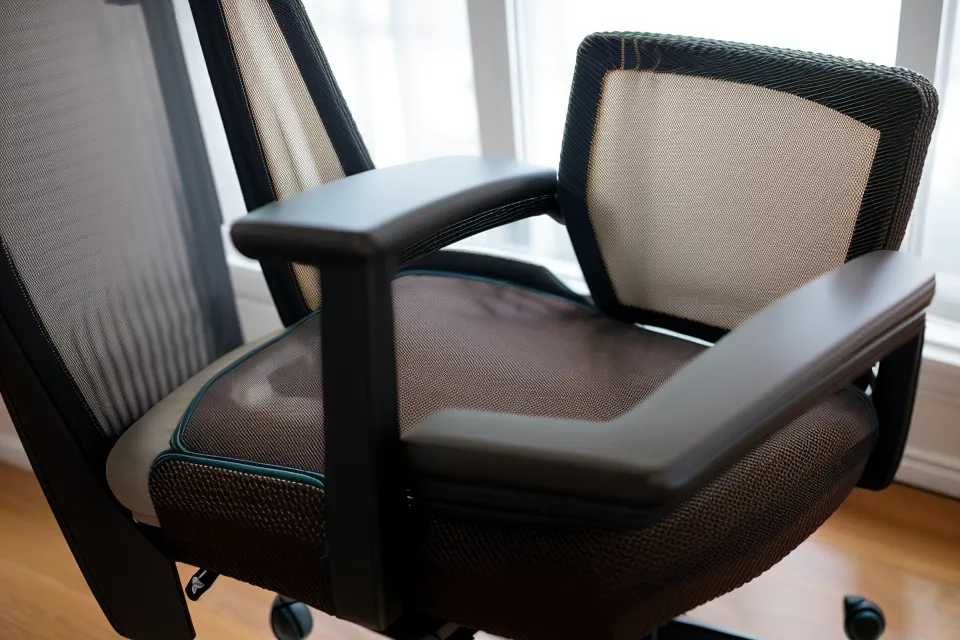
Most task chairs use a sliding seat pan — pull a lever, scoot the cushion forward or back, done. The Aeron can't do that, because the seat and backrest are a single taut sheet of Pellicle mesh stretched across a fixed frame. Loosen that frame enough to let it slide and the mesh loses the tension that makes it supportive in the first place. Herman Miller solved the sizing problem a different way: three frame sizes instead of one adjustable one. I'm no one's ergonomics expert, just someone who's sat through enough bad video calls to know that height is the least useful number on that whole chart.
Picture the mesh like a trampoline instead of a cushion. A trampoline stays useful because the frame holds a fixed tension around the edges — loosen one side to resize it and the whole surface goes slack. That's the trade Herman Miller made with the Aeron: fixed frame, tight mesh, real support, and zero flexibility once you've bought the wrong size. A traditional chair with a sliding pan and a squishy cushion forgives a bad guess. The Aeron doesn't forgive much of anything. If the frame is too narrow for your hips or too short for your thighs, no lever fixes that later.
Size A Isn't a 'Small People' Chair
Herman Miller lists Size A for roughly the 4'10" to 5'4" height range, and it's easy to read that as 'the petite chair.' A reader named Destiny Hawkins emailed a while back after finding one of my other posts, pointing out that most ergonomic-chair roundups seem to assume a body over five foot eight. She's not someone who buys anything without working through every follow-up question first, and this time the question was simple: what should someone under five foot four actually be looking for, if not just the number on the box?
The answer sits in the seat pan, not the frame height. Size A's cushion runs shorter front-to-back and narrower side-to-side, which matters if your thighs are short enough that a standard seat depth would cut off circulation behind your knees. That's the same principle behind seat-depth adjustment on other ergonomic chairs: the length of your thighs decides comfort more than your overall height ever will. Where Size A disappoints petite users who happen to carry weight in their hips is the rigid plastic bolster on each side — it isn't adjustable, and if it presses into your outer thigh, the frame feels smaller than the height chart promised. Getting the frame size right is only half of it, too: recline-tension calibration is a separate adjustment most people never touch after unboxing, and I've gone through how to adjust your ergonomic office chair for better shoulder support in more depth elsewhere.
Size B Is the Default Choice, Not the Right One
Size B covers the widest range on paper, something like 5'2" to 6'6", which is exactly why most corporate buyers default to it without a second thought. It's the size you'll find in nine out of ten open-plan offices, and for a huge share of bodies, it's genuinely fine. The trouble starts when someone in that height range also carries extra width through the hips or thighs. I sit comfortably within Size B's range myself, and during long stretches of back-to-back calls, the plastic rim at the edge of the seat started pressing into my hips the moment I shifted position. Sitting bolt upright the whole day would have hidden that problem. Nobody sits bolt upright for eight hours.
Lower back pain changes the calculation further. If sciatica or chronic issues along your lumbar curve are already part of your life, the mesh needs to meet that curve precisely, and a hip-pinched posture undoes the fit fast. I've rounded up the most comfortable office chairs for people with sciatica pain separately, and gone deeper on how to choose office chair lumbar support to relieve back pain too, since that's too big a topic for a sizing guide alone. None of that replaces an actual diagnosis, though — persistent back pain is a conversation for a physician or physical therapist, not a chair review.
Reading the Overlap Zones (and Where Size C Fits)
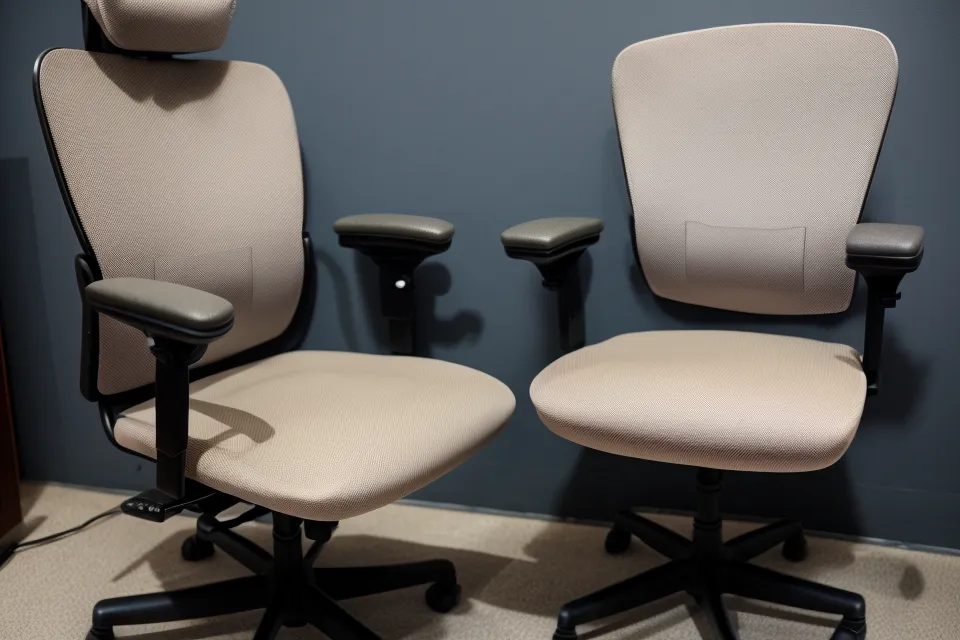
Somewhere between every two sizes sits a band of heights and weights where you could technically qualify for either one, and that's where most people guess wrong. Say the chart puts you right on the line between A and B — the instinct is to pick whichever feels 'more normal,' which usually means B, because nobody wants to feel like they need the smaller size. Normal isn't the goal, though. If your hips are narrow and you tend to sit still through most of a call, the tighter frame of Size A can feel supportive rather than confining. If you shift your weight, lean side to side, or the chair needs to survive a kid climbing into your lap mid-call, the extra width of Size B gives you room to move without hitting plastic.
Size C solves a real problem for bigger frames: at 5'3" to 6'6" with more width and depth than Size B, it gives broader hips and longer thighs room the smaller frame simply doesn't have. But it punishes anyone of average height who picks it purely for the extra room. Sit in a Size C at 5'5" and you'll likely find you can't scoot all the way back against the lumbar curve without the front edge of the seat catching behind your knees, which pushes you into a slouch that undoes the entire reason you bought an ergonomic chair to begin with.

Frame Size Is Only Half the Fit
Armrest height and width matter just as much as frame size and get ignored even more often, since a chair that fits your hips perfectly can still push your shoulders up around your ears if the armrests sit wrong for your desk. None of that shows up on the A, B, C chart either — it's a separate adjustment layered on top of whichever size you land on.
My desk setup sits in a converted second bedroom, and most afternoons the sun swings around enough to catch the crossbar of my standing desk as it rises, throwing a bright line across the room right when I'm trying to read the screen. None of that has anything to do with chair frame size, and that's exactly the point: a standing desk with the wrong height range does its own separate damage, and a monitor sitting even an inch below eye level will tip your head forward no matter how well the chair holds your hips. Sizing the Aeron correctly fixes exactly one variable in a room full of them.
What Sizing Can't Fix
Price doesn't automatically fix the durability problem either — the cheap mesh chair that sagged on me in two months proved cheap doesn't mean durable, but an expensive frame isn't a guarantee by itself. That's why I look at warranty length now before I look at the price tag at all — a longer warranty signals more about the materials' expected lifespan than the sticker ever will. The same logic applies everywhere else in a kid-and-pet household: a washable rug earns its keep by surviving real use, not by looking good in a listing photo, and a chair should have to clear the same bar.
If the whole rigid-frame-and-mesh approach still doesn't sound like your style, I've weighed the Steelcase Gesture vs Herman Miller Embody for long remote workdays elsewhere, since a different frame philosophy might suit your body better than either Aeron size ever will.
None of this makes the Aeron uniquely complicated — it just makes the letter on the frame closer to a shoe width than a shoe length. Measure your seated hip width and your thigh length before you look at the height chart at all, then use the height range only to confirm you're not obviously outside the frame's reach. Get those two measurements right and the A, B, C system stops being a guessing game and finally does what it was built to do.