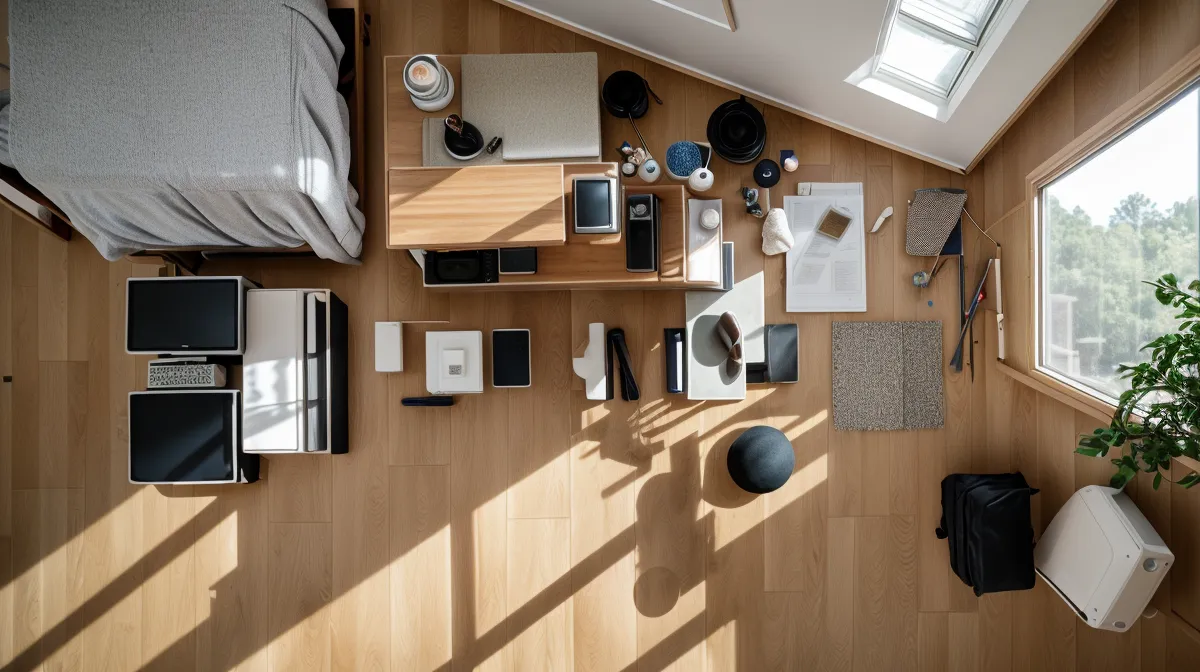
Three chairs. That's how many budget flat-packs a friend of mine burned through at her new branch office before the third one let go at the caster base, right as a client was walking through the door. She called me that evening sounding equal parts mortified and defeated, the exact sound I remembered making myself back when I first went fully remote and assumed any chair with arms would do.
Here's the short version of what I told her, and what I'd tell anyone furnishing a small business's first real office: buy the cheap, flexible stuff first, and save the serious money for the pieces people sit in all day, once you actually know how the team works. Office furniture decisions made in the first panicked week of a lease rarely survive contact with how a team actually functions six months later.
Why a Growing Small Business Should Skip the Matching Catalog Spread at First

Most small businesses hit this wall around the fifth or sixth hire. Consumer desks and chairs, the kind built for a spare bedroom, were never designed for consecutive workweeks of real use: veneer peels, gas cylinders sink by mid-afternoon, arms wobble no matter how many times you re-tighten the hex screws. Commercial dealers exist on the other end of that spectrum, but they tend to treat a six-person team the way a steakhouse treats a to-go order: technically possible, clearly not the point. Minimum order sizes and twelve-week shipping delays aren't built for a company that might double its headcount before the furniture even ships.
This is the same durability-versus-price tradeoff anyone wrestles with buying a single office chair, just multiplied across a whole floor plan. Your team's actual spatial needs will shift once workflows settle; five people who you'd swear need five separate desks might spend half their time huddled around one shared table within a quarter. The same modular thinking that lets a sectional couch get rearranged around a toddler's fort applies to desks: ganging brackets that let tables run side-by-side or split into solo pods mean the floor plan can follow the team instead of locking it in before anyone's figured out how they actually work.
What Does 'Commercial-Grade' Office Furniture Actually Mean?
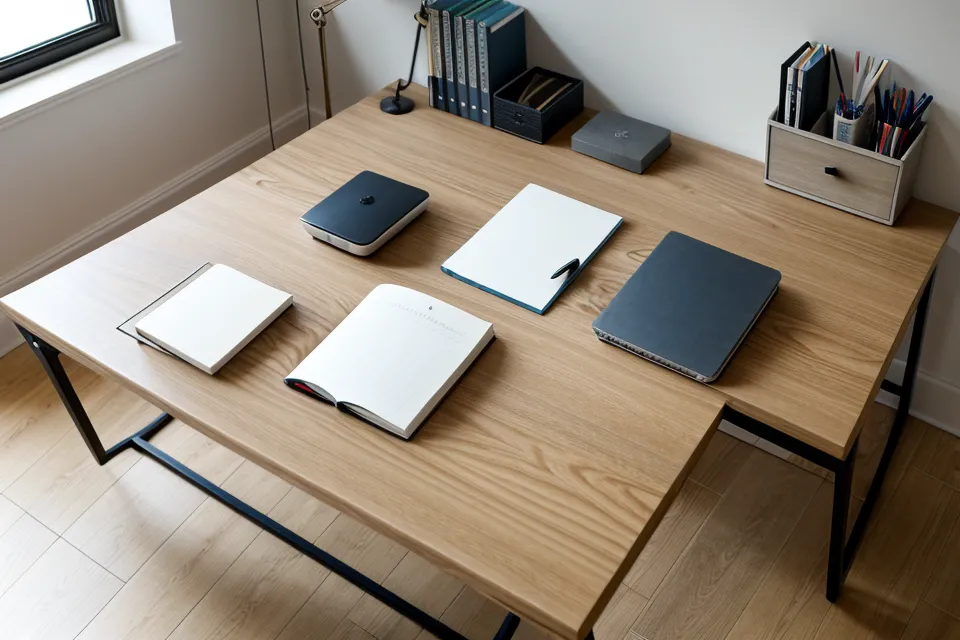
Past the clean product photography, commercial furniture gets tested under cyclic loading standards meant to mimic years of multi-shift punishment: tilt mechanisms cycled over and over, drop tests most residential chairs never see before hitting a showroom floor. A published weight rating around 300 pounds on a core task chair tells you the frame was built for a range of bodies across shifts, not just whoever modeled it in the catalog. A ten-year frame warranty on structural components is the maker betting the steel outlasts your lease; a residential warranty tapping out around twelve months is the maker betting you won't notice before then.
Warranty length ends up being one of the more honest signals you'll get, mostly because it's the one number a company can't dress up with better lighting. Fabric matters too; tight-weave polyester built for heavy commercial use holds up to belt loops and bag buckles in a way that decorative open-weave mesh just doesn't.
Why Cable Chaos Shows Up So Fast in a Shared Office

A home office usually means one monitor and one wall outlet behind a desk. Six workstations in a shared space means an actual bird's nest of charging bricks, monitor hubs, and Ethernet drops, and if the desks don't have integrated wire trays or drop-in cable channels, that clean layout turns into a tripping hazard within forty-eight hours.
Desks built with lateral stability in mind matter more here than people expect; the sturdiest ones don't shift even when people lean hard on the same edge during a huddle, and that stiffness has nothing to do with how nice the laminate looks. Pair that with a dedicated ergonomic keyboard tray to keep wrists at a neutral angle instead of bent up over a standard desktop, and check that any sit-stand desk's height range actually covers your shortest and tallest hire — a monitor needs to land at eye level no matter who's sitting there that day. If square footage is tight, the same concealed-footprint logic that makes a fold-away desk work in a studio apartment is worth borrowing for a cramped storefront branch office too.
Fitting Different Bodies Into One Ergonomic Seating Line Without Buying Ten Chair Models
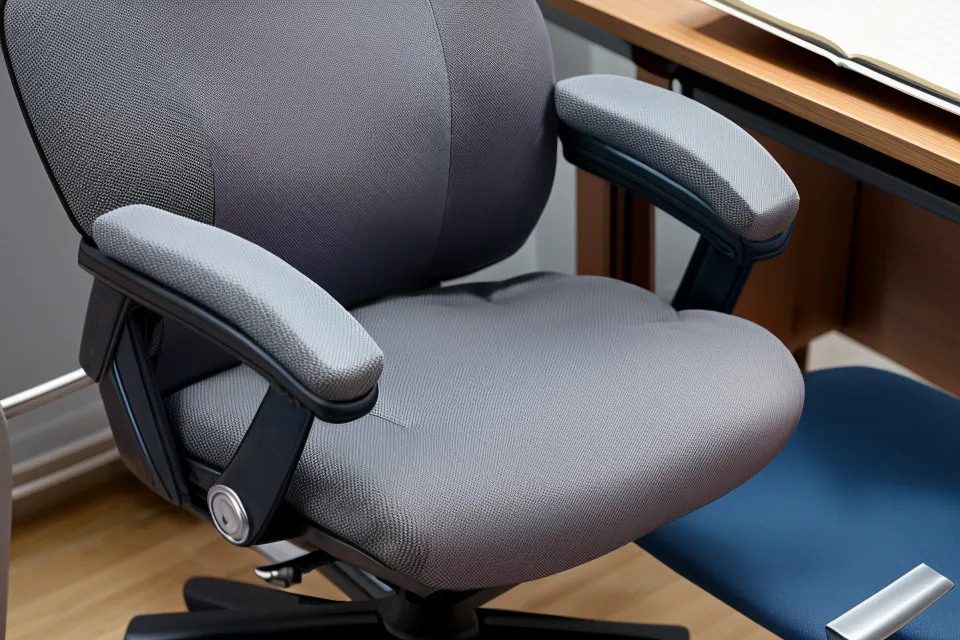
General guidelines for commercial seating aim to fit people across a wide range of body sizes, but that takes real adjustability, not a single up-and-down lever. Look for adjustable lumbar depth, armrests that slide forward and back so someone can pull close to their desk, and a seat pan that slides rather than staying fixed: a static pan cuts off circulation behind a shorter person's knees and leaves a taller coworker perched like they're on a barstool.
Recline tension that actually calibrates to body weight, a backrest that flexes with you instead of staying rigid through a long afternoon, a headrest that supports the neck instead of just the back of the skull, seat suspension material that doesn't go flat under daily pressure: none of these show up in a product photo, and all of them are the difference between a chair that works for one body type and a chair that works for a room full of different ones. I went through a long stretch of just cycling the height lever up, then down, then up again, convinced the right notch existed somewhere on a chair that was never actually built to fit me, before I understood that no amount of fiddling fixes a frame that's wrong for your body in the first place.
It wasn't until a deadline sprint had eaten most of an evening, long after I should've logged off, that I noticed something: my neck hadn't locked up the way it always used to by that point. That's the kind of proof that actually sticks, more than any spec sheet.
A physical therapist I know from the pickup line at daycare — the kind of person who shows up to a backyard gathering with her own lumbar pillow in tow, chair be damned — put the limits of all this plainly once: a chair is not treatment. If anyone on a team deals with chronic spine issues, wrist impingement, or recurring sciatica, that's a conversation for a physical therapist or occupational health specialist, not a furniture spec sheet. I wrote more on chair sizing specifically in best Branch office chairs for tall users with long legs, and the short version holds here too: a unified look across the office is fine, but the mechanics under the cushion need to adapt to actual humans.
You Don't Need Matching Executive Chairs for the Conference Room
No, and this is where I'd tell anyone to slow down. A set of simple, lightweight stacking chairs covers client meetings just fine for the first several quarters of running a space. Save the real budget for the chairs people sit in for eight straight hours, and give the floor plan time to breathe before anything gets bolted down permanently.
The Office Furniture That Held Up Once Real Workweeks Started
Once the daily grind actually set in at my friend's branch office, the difference showed up in small, unglamorous ways. Desks stayed put even with people leaning hard on the front edge during meetings: zero side-to-side wobble, no matter how many elbows landed on them. Press a palm into a cheap seat pan deep into a workweek and you can already feel how much give it's lost since morning; the better foam held its shape instead of bottoming out against the pan underneath. Armrest adjustments stayed locked in place instead of developing the loose rattle that shows up fast on lower-tier hardware.
None of that shows up in a showroom. It only shows up after real people sit in the thing every day for long enough to find its weak points, which is exactly why the buying order matters more than the brand name on the invoice: cheap and flexible while you're still figuring out how the team works, built to last once you know.