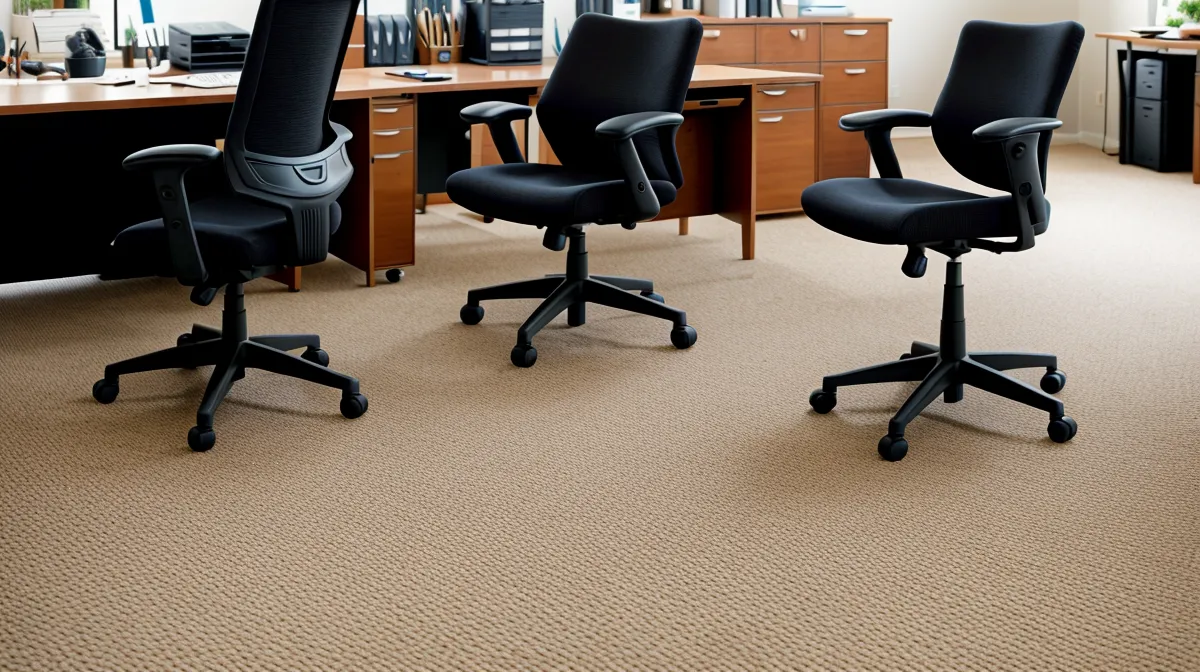
Caster wheels leave a pale, flattened track through a cheap rug within a few weeks — worn straight down to the backing along the exact path the chair rolls, while the rest of the pile stands untouched. That's the specific kind of damage a home office takes on once a heavy ergonomic chair and a kid with strong opinions about juice boxes share the same room. Somewhere between replacing a wheel-shredded rug for the third time and mopping up a spill mid-Zoom, washable rugs stopped being a nice-to-have and started being the only realistic option for a high-traffic remote-work setup, and Ruggable kept coming up as the one worth actually answering questions about.
Quick disclosure before any of that: several of the furniture links below are affiliate links, including the chairs mentioned for context. If you buy through one, I earn a small commission at no extra cost to you — the arrangement doesn't change which pieces make the list. Everything named here has spent real time in my own home office or, in a couple of cases, in a friend's. None of it is a paid placement. I'm not an ergonomics specialist or an interior designer, just someone who got tired of replacing furniture on a loop, and if you're dealing with actual back pain, a rug won't fix that — talk to a physical therapist or doctor about that part.
Is a Washable Rug Actually Worth It in a Kid-Filled Home Office?
Short answer: yes, if the alternative is replacing a rug every few months. A washable rug built for this — Ruggable's system specifically — comes as two pieces: a grippy pad that stays put on hard flooring, and a printed cover that lifts off for the wash. That separation is the whole trick. The pad doesn't need cleaning because nothing actually touches it directly; the cover takes the spills, the crumbs, and the caster traffic, and it comes off in about the time it takes to strip a bed.
None of that solves every home-office problem, though. Readers ask me constantly whether a washable rug also fixes chair rollability, foot fatigue at a standing desk, or the general chaos of running a desk and a kid's snack routine in the same square footage. It doesn't, not by itself. It solves the mess problem. The rest is a separate set of decisions, and most of them come down to what's actually rolling or standing on the rug in the first place.
Will Chair Casters Actually Wreck a Ruggable the Way They Wrecked Everything Else?
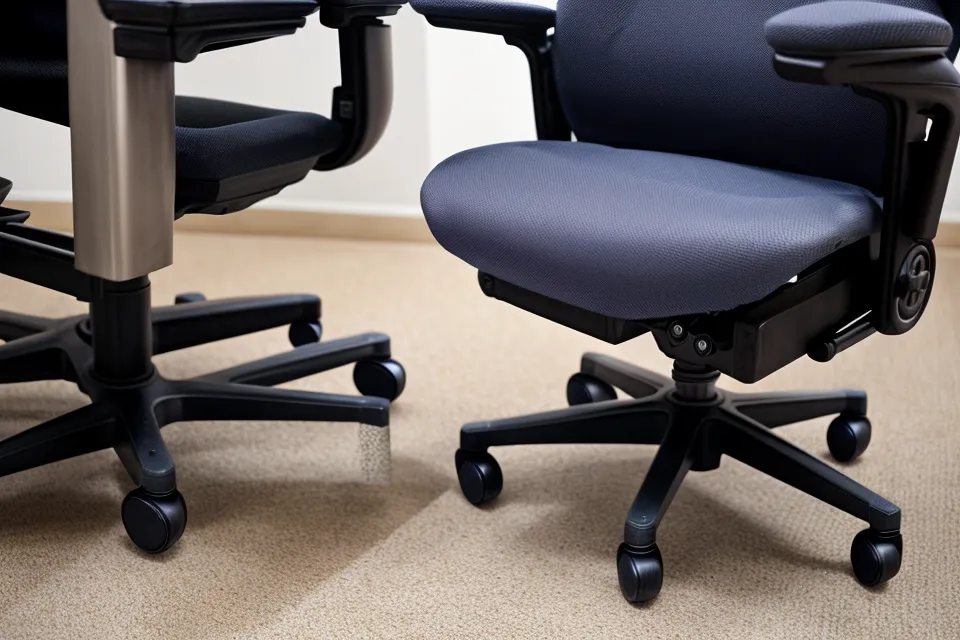
Before any of this, I tried wedging an aftermarket lumbar pillow behind a cheap desk chair, and it compressed flat within a few weeks. No shape left, just a memory of where a curve used to be. That's what eventually pushed me toward a Herman Miller, and toward paying real attention to the warranty terms on the Herman Miller Aeron specifically rather than just the sit-test in a showroom. Seat depth, armrest width, and how much resistance the recline gives back — I've picked through all of that elsewhere; here the only ergonomic variable that matters is whether the floor lets the chair actually move.
Regular carpet pile bunches under a rolling chair, catching the casters until the rug ends up in a little ridge that's one stumble away from a face-plant. Ruggable's low-pile covers run thin enough, around an eighth of an inch, that the wheels glide instead of catching. Paired with a Branch chair — casters that are oddly picky about surfaces — mine never developed the bunching I was bracing for, even after months of rolling back and forth over the same stretch.
A fellow freelancer I know, Omari Duchamp, owns three desks in his house and works at exactly one of them — he'd tell you the rug is the last thing worth obsessing over until the chair actually needs to roll on it. He's not wrong. The heavier the chair, the more the flooring underneath matters: a Steelcase Series 2 with a loaded gas cylinder puts more strain on a thick rug pad than a lighter task chair does, and high-pile carpet can genuinely fight the mechanism over time.
What Actually Happens When You Wash an 8x10 Cover
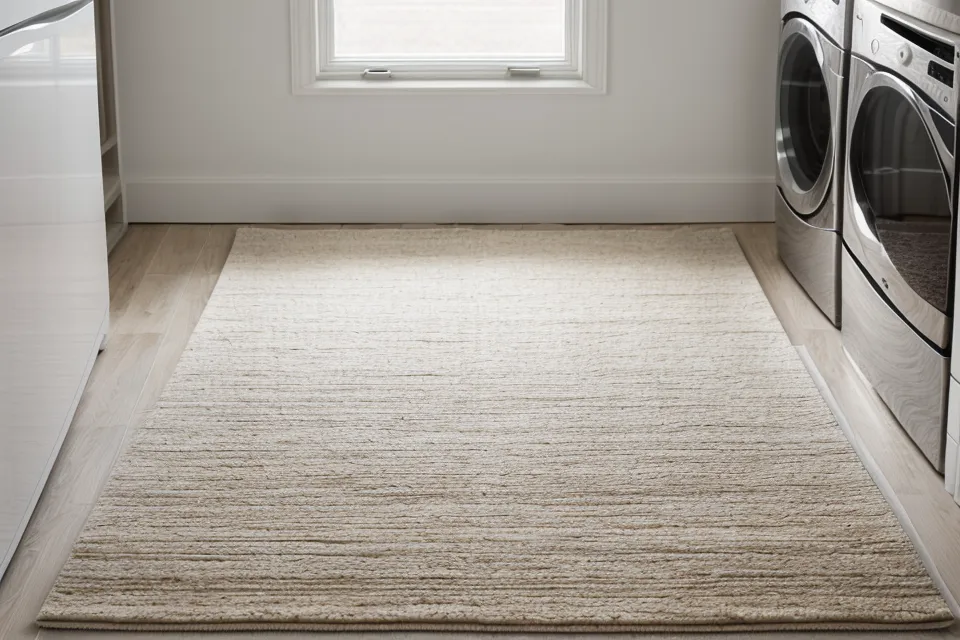
Eight-by-ten is a lot of fabric to trust to a regular home washing machine, and the first time I loaded mine in, I fully expected an unbalanced drum and a rug that came out looking like a wadded receipt. It didn't. It came out of the dryer looking close to how it looked out of the box — no fraying, no visible fading, no shrink that changed how it sat under the desk. A rug's washability rating is worth checking before you buy one for this exact reason: not every "machine-washable" claim means the same thing at eight-by-ten as it does at a bath-mat size, and that's a rabbit hole for another article, not this one.
One deadline sprint ran long past a reasonable stopping point, and when I finally pushed back from the desk, my neck wasn't doing its usual end-of-day lock. For the first time in a while I actually noticed its absence instead of the ache itself. I don't think the rug gets credit for that one. That's a chair-and-posture thing. But it's the kind of small, unglamorous proof that the whole setup — chair, desk, floor — was finally working together instead of against each other, and the rug not being part of the problem anymore was one piece of it.
Renwick Tynan, a regular in a home-office forum I read, once asked whether the rug's edge would catch on anything running along the floor — cables, mostly, since he notices cable routing before he notices almost anything else. It doesn't, as long as cords stay along the baseboard instead of crossing the rug itself. The bigger kid-proofing question for a lot of households isn't the rug at all, it's the furniture around it: modular pieces like Lovesac handle a snack-and-toddler lifestyle the same way the rug does, with covers that come off and wash separately from the frame. I've written up Lovesac Sactional configurations for families if the rest of the room needs the same treatment as the floor.
A Thin Rug Won't Save Your Feet at a Standing Desk
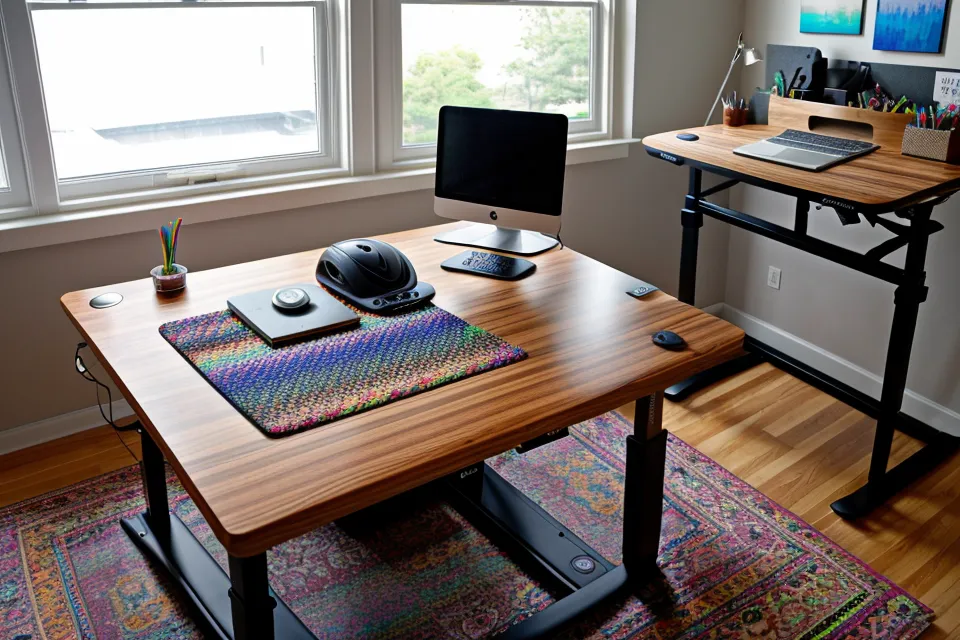
A thin rug does cost something at a standing desk, and it's the trade-off nobody mentions when they're selling the low-pile version. An eighth of an inch is fantastic for door clearance — no more catching an edge under a swinging door — but it gives almost nothing back if you're standing for long stretches. A traditional rug pad has more cushion built in specifically for that. Get the height range dialed in on a standing desk, get the monitor sitting near eye level, and the floor is still the one variable a rug alone won't fix.
An anti-fatigue mat that slides out when the desk goes up has fixed this for me, but the rug by itself didn't do it, and it would've been easy to oversell that part. Standing on a thin pad over a slab foundation for hours starts to show up in sore arches by evening, and that's worth taking seriously rather than pushing through. If ongoing foot, back, or posture pain is part of the picture, that's a conversation for a doctor or physical therapist, not a furniture blog.
Picking a Rug When You've Already Sunk Real Money Into the Chair
Once a chair purchase gets into serious territory, the flooring underneath stops being an afterthought. A long warranty is one of the clearest signals of how a company expects its furniture to hold up, and the same durability-versus-price math applies to a rug — a cheap one that needs replacing every few months isn't actually cheaper than a washable one that survives years of the same abuse, it just spreads the cost out in a way that's easy to miss. For a more polished, showroom-adjacent look that still tolerates a low-pile rug underneath, I've seen decent pairings from Design Within Reach pieces, though that's a step up in both price and formality from most of what I'd actually recommend for a house with a toddler in it.
The Verdict for High-Traffic, Kid-Heavy Home Offices
Put all of it together and the case for a washable rug in a working, kid-occupied home office is pretty simple: low-pile options roll well under a heavy chair, the cover handles a wash without falling apart, and the one real cost is standing comfort, which a separate mat solves anyway. A home office doesn't need to look like a showroom to function — it needs to survive a spilled juice box, a chair that rolls dozens of times an hour, and a kid who treats the floor under the desk as a second living room. If you're weighing a Ruggable against a traditional rug for a similar setup, start with the low-pile version and keep a mat nearby for standing sessions — that combination has outlasted everything else tried in this exact spot.
That's really the whole test: does it survive contact with actual daily use, or does it just look good in a listing photo. For a rug living under a rolling chair in a house with kids, that's the only review that matters.
| Product | Rating | |
|---|---|---|
| Herman Miller Aeron Top Pick | 9.5 | Read More → |
| Steelcase Gesture | 9.2 | Read More → |
| Branch Ergonomic Chair | 8.5 | Read More → |
| Design Within Reach Eames | 8.0 | Read More → |
| Lovesac Sactional | 8.8 | Read More → |
Herman Miller
Pros
- + Twelve-year warranty covers the gas cylinder and casters
- + Mesh seat stays cool during humid Raleigh afternoons
- + PostureFit SL support made a real difference for lower back pain
Cons
- ✘ Up-front price is a significant investment
- ✘ Adjustments take about a workweek to fully dial in