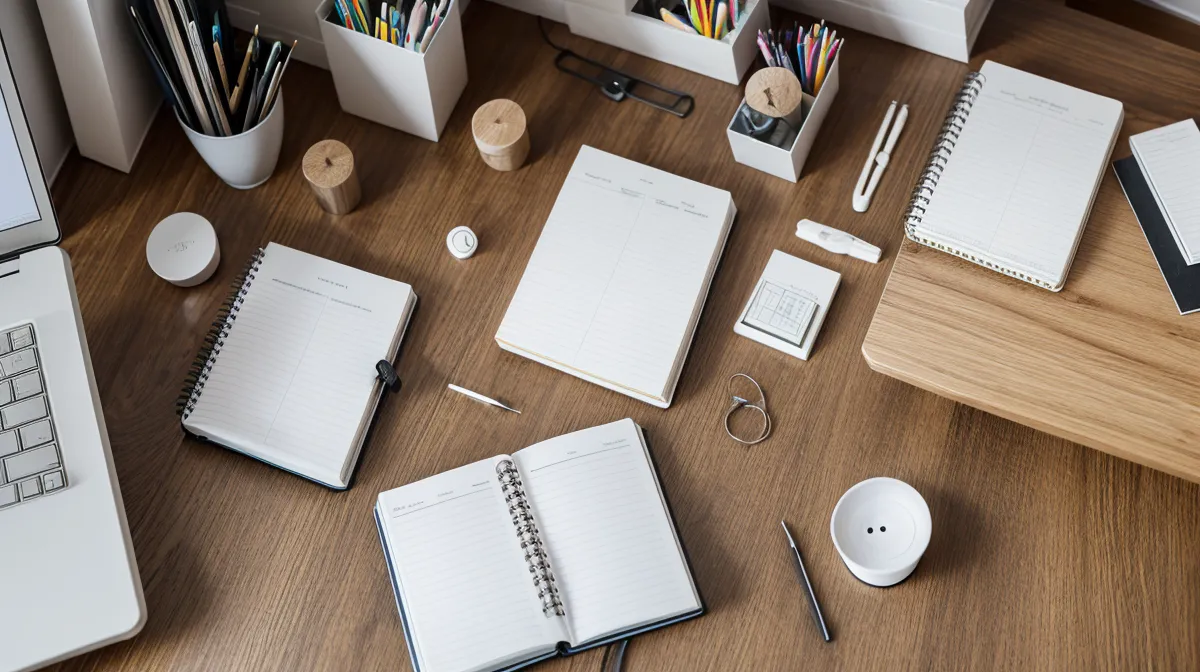
A dropped secretary-desk lid closes with a flat, final thud that swallows a laptop, a coffee ring, and whatever spreadsheet was open two seconds earlier, which is exactly why hidden-desk furniture gets marketed to anyone squeezed into a small-space office as the tidy answer to a messy problem. The trouble is that a closed lid and a comfortable spine are two completely different promises, and most of what gets sold as ergonomic furniture for a tight footprint only ever keeps one of them.
Here's the myth I keep running into, in comment sections and group chats alike: shrink the desk, and the ergonomic cost shrinks right along with it. Furniture brands lean into that logic hard, because a smaller footprint photographs beautifully tucked into a living room and hides an entire home-office-organization problem behind a folded panel of wood. None of that says anything about whether your shoulders will thank you for it three hours into a workday.
Is a Secretary Desk Just a Smaller Desk in a Small-Space Office?
No, and the difference comes down to depth, not looks. A compact secretary desk usually closes to somewhere around nineteen inches deep, slim enough to sit flush against a wall without looming over a room the way a full dresser would — about the footprint of an end table, with considerably more use in it. Once that lid drops and you start typing, though, you're working inside whatever knee room survives the leaf itself, the hinges, and any internal cubbies eating into that measurement. That's where small-space math stops being about square footage and starts being about your spine.
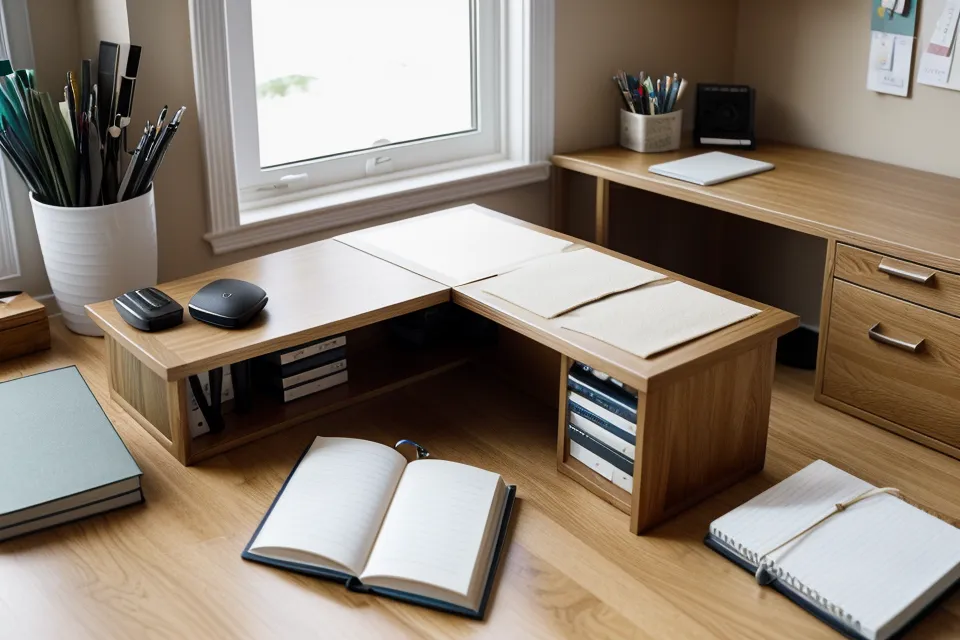
Most of these desks land at a fairly standard desk height once the lid is down — nothing unusual on paper. What the spec sheet won't tell you is how little of that height accounts for the leaf's own thickness, or how awkward the hinge placement can get. Cross your legs under one of these and there's rarely enough clearance to do it without leaning forward, and leaning forward for an entire afternoon is how a neck starts complaining by five o'clock.
The Knee-Room Problem Nobody Photographs
Product photos never show what happens once you actually sit down. If the leaf is shallow, the keyboard ends up right at the front edge, and your elbows get pushed into an angle that has nothing to do with comfort. Seat depth adjustment on a good chair can claw back an inch or two here. It's a whole subject on its own once you get into something like the Herman Miller models I've tested for long stretches at a desk, but a fixed leaf doesn't care how your chair adjusts. Armrests are the other casualty: the same rabbit hole I went down comparing Steelcase chairs built for remote work applies here too, because if your armrests can't clear the underside of that dropped lid, you either bang them every time you scoot in or stop using the armrests at all.
Compare that to something like the mid century modern desks with ample storage I've sat at for full days without incident — the difference isn't the storage, it's that you can scoot the chair all the way in because there's no leaf blocking your legs. A secretary desk trades that scoot-in room for the ability to close an entire workday behind a door, and that's a fair trade in a small-space office, as long as you go in knowing you're making it rather than assuming you get both for free.
Closing the Lid Doesn't Automatically Fix Your Posture
The lid trick and the posture trick are not the same trick, even though they get sold as a package deal. Hiding the mess doesn't straighten your neck. My friend Patience Hollowell, a physical therapist, is the kind of person who shows up to a two-hour book swap with her own lumbar pillow tucked under one arm, and when she told me flatly over coffee that a closed lid says nothing about what your spine did while it was open, I believed her before she finished the sentence.
There was a stretch where I tried stacking sofa cushions under my laptop to fake some kind of standing arrangement on top of the desk. It wobbled every time I leaned on the keyboard, which tells you exactly how well that particular workaround held up. The real proof came later, when one particularly long day finally wound down and I stood up from that desk with my toddler still on one hip — nothing in my lower back registered the movement at all, and that told me more than any product description ever could.
Lumbar support is its own deep argument, one I've made at length elsewhere for people managing sciatica in a proper task chair, but a secretary desk was never going to fight that battle for you. It's a work surface, not a chair. Recline tension calibration matters even less here, since you're leaning toward a fixed wooden edge instead of a seat back built to give under your weight. And if what you're dealing with is ongoing pain rather than end-of-day stiffness, that's a conversation for a physical therapist, not a furniture review.
Treat the Drop-Lid as a Perch, Not Your Eight-Hour Chair
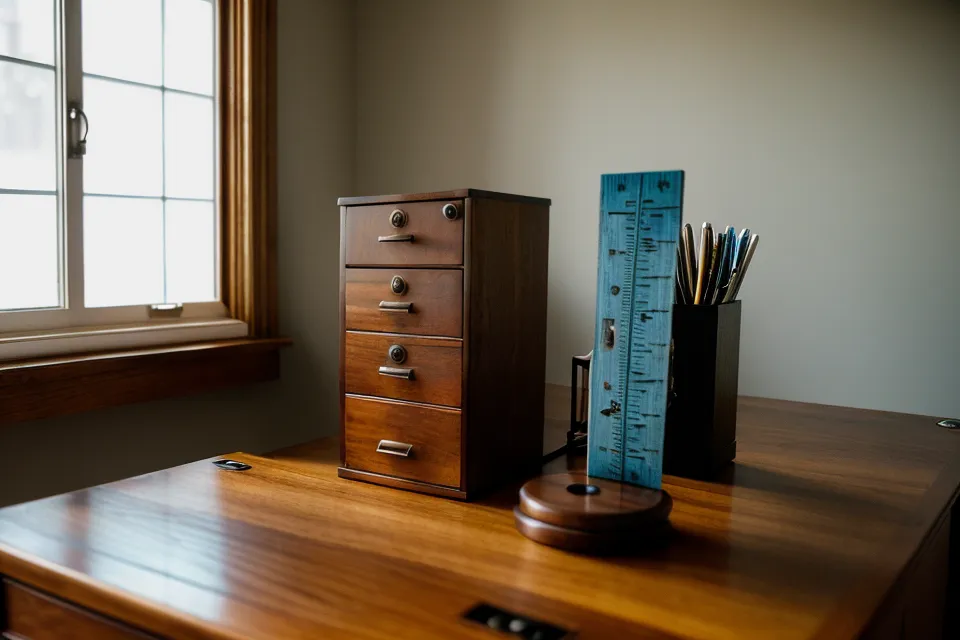
Here's the actual fix, and it has nothing to do with buying a fancier secretary desk. Stop treating the dropped lid as a primary eight-hour workstation and start treating it as a docking station instead. The fixed height only turns into a real problem when you're using it the way you'd use a standing desk with an actual range of motion, and a secretary desk was never built to move through one. A proper standing desk with real adjustability, the kind I've laid out in my standing-desk guide, will beat a secretary desk on raw ergonomics every single time. What the secretary desk wins on is everything else: the ability to close a door on the workday inside a room that also has to function as a living room.
A slim external keyboard and mouse, pushed back a few inches from the lid's edge, buys enough distance to stop hunching toward the screen. Monitor height gets trickier on top of that, since a fixed-height lid means you can't just raise the desk to meet your eyeline the way a proper monitor arm would let you — you're stuck propping a laptop or screen on whatever you can find instead, which is its own small ergonomic compromise worth knowing about going in.
Hutch vs. Bureau: The Real Home-Office-Organization Trade-off
Two basic body styles cover almost every secretary desk on the market. A hutch runs tall and gives room for a printer and the small landslide of notebooks that seems to multiply on its own, while a bureau looks more like a chest of drawers and trades vertical storage for drawer space underneath. Bureau style wins for me, mostly because the drawers end up holding toddler craft supplies as often as anything work-related, which is a fair use of a home-office-organization piece in a house that isn't only an office.
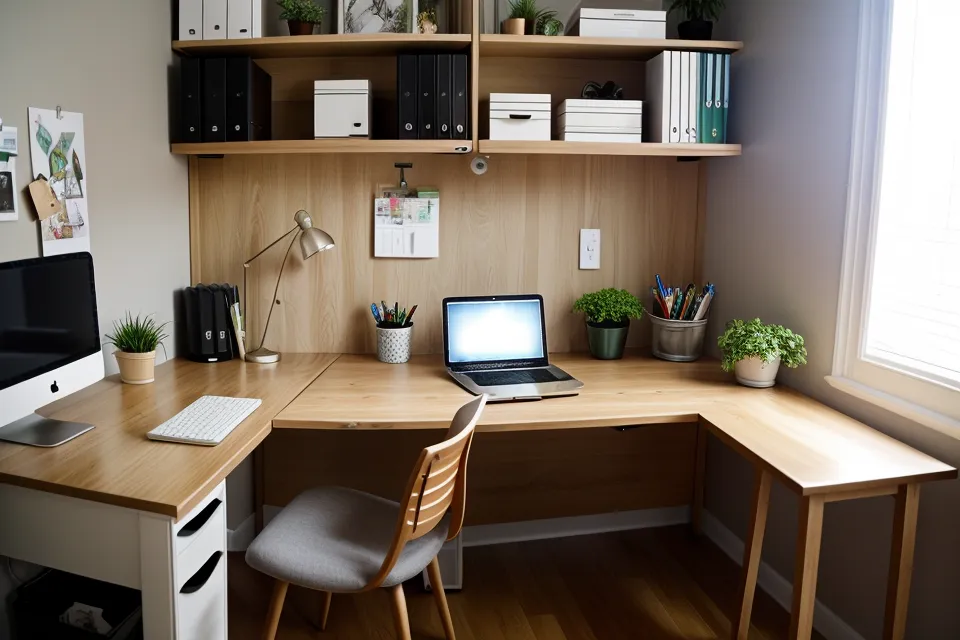
Whichever style gets picked, the hidden-desk trick only holds up if cable management does its job. Unplugging three things just to close the lid means the lid stops getting closed within a week, and the whole point evaporates. Pre-drilled cord routing in the back panel matters more than the finish does, and it's worth checking before anything else.
Hinges and drawer glides are where the durability-versus-price math I've made before about cheap office chairs shows up again in a different piece of furniture. The first secretary desk I ordered came from Ballard Designs, and it went back within the return window because the hinge stuck every single time the lid dropped shut. Hardware you can never judge from a product photo, only from having the thing assembled in your own living room. Even a good one arrives wrapped in a taut layer of plastic film that gives off the same faint, sweet chemical smell you get peeling the protective film off a brand new chair mat, which has nothing to do with how the hinge holds up a year later but is the first thing you notice before you've opened a single drawer. A soft-close hinge on a discount frame tends to loosen fast after that, and it shows up as a wobble in the lid within the first handful of uses. A warranty is usually the most honest signal a manufacturer will give about how long those hinges are expected to hold, more honest than anything in the product description, and it's worth checking before the drawer pulls or the finish.
None of this happens in a vacuum, either. In a house where snack debris dictates most of the decor decisions, I've leaned on washable area rugs just to keep the floor under the desk presentable, and a closed cabinet that looks tidy at a glance matters for roughly the same reason a washable rug does — both buy you the appearance of order on a day when actual order isn't happening.
The Hidden-Desk 'Off Switch' Is Real. Just Don't Call It Ergonomics
One part of the marketing is actually true: closing that lid works as a genuine mental switch. There's a specific, heavy sound to a wooden flap dropping shut that tells your brain the workday is done in a way that minimizing a browser tab never quite manages. That's a legitimate reason to want one of these — it's just a psychological benefit, not an ergonomic one, and conflating the two is exactly the myth this whole piece is arguing against.
Secretary desks aren't as comfortable across a full workday as a proper executive office chair paired with a real standing desk. Not even close, and nobody testing furniture honestly would tell you otherwise. What it gives you instead is a home office that doesn't announce itself the moment company walks in. My actual rule at this point: use the secretary desk for anything under a couple of hours at a stretch, and once a task runs longer than that, move to a setup built for it — a proper chair, or even one of the comfortable recliners for laptop work I've tested for exactly that kind of session, just to change your spine's position for a while. Keep the secretary desk for what it's actually good at, and stop expecting the small-space fix to double as the ergonomic fix — those were never the same promise.