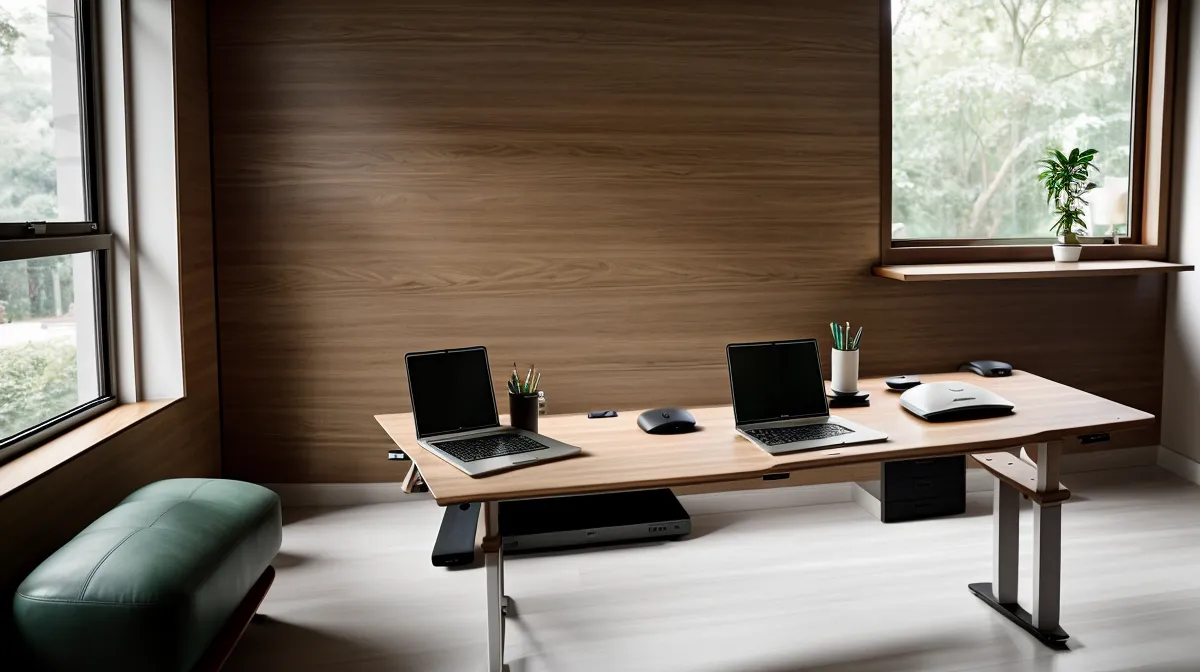
175 pounds. That's the weight limit stamped on the spec sheet of the Branch Daily Desk, and for the first stretch of running mine every day, I kept half-expecting my monitor and laptop to actually test it. They never came close — which, it turns out, wasn't really the question I should have been asking about a minimalist standing desk built for a remote-work setup like mine.
Quick housekeeping before the rest of this: some of the desk and chair links below are affiliate links, meaning I earn a small commission if you buy through one, at no extra cost to you. Every piece mentioned here has spent real time in my actual ergonomic office, not a studio set built for photos. None of this is medical advice — I'm a content strategist who got tired of replacing furniture, not a physical therapist, so if back or neck pain is a recurring issue for you, a doctor or PT is a better source than my desk collection.
The Desk Graveyard and the Case for a Standing Desk
By the time I finally admitted my old desk was the actual problem, my chair had already taken most of the blame for months. I'd tried the usual fixes first — a rotation of desk-stretch routines pulled from YouTube that loosened things up for maybe twenty minutes before the same tightness crept right back in. I'd also already worked through how to choose office chair lumbar support to relieve back pain, but a great lumbar setup only goes so far when the surface in front of you sits three inches too low and shivers every time you type.
Everyone in this space eventually points you toward the big commercial names — Herman Miller's desk lineup, Design Within Reach, the kind of gear that shows up in every glossy "best standing desk" roundup with a warranty that outlives the desk itself. Budgeting for one of those felt less like buying office furniture and more like budgeting for a major kitchen appliance. That's roughly where the Branch Daily Desk found me — a minimalist footprint, motorized height adjustment, and a price that landed closer to a nice air fryer than a commercial workstation.

Twenty Minutes Fighting a Cable Tray
The desk showed up in the middle of a packed project stretch, and assembly went fine right up until the cable management tray. I spent a frustrating stretch trying to force screws into holes that wouldn't bite, convinced the hardware was defective, before realizing I'd installed the whole tray upside down. Once it was flipped the right way, the rest of the frame came together fast enough that I almost forgot how close I'd come to writing an angry review over my own mistake.
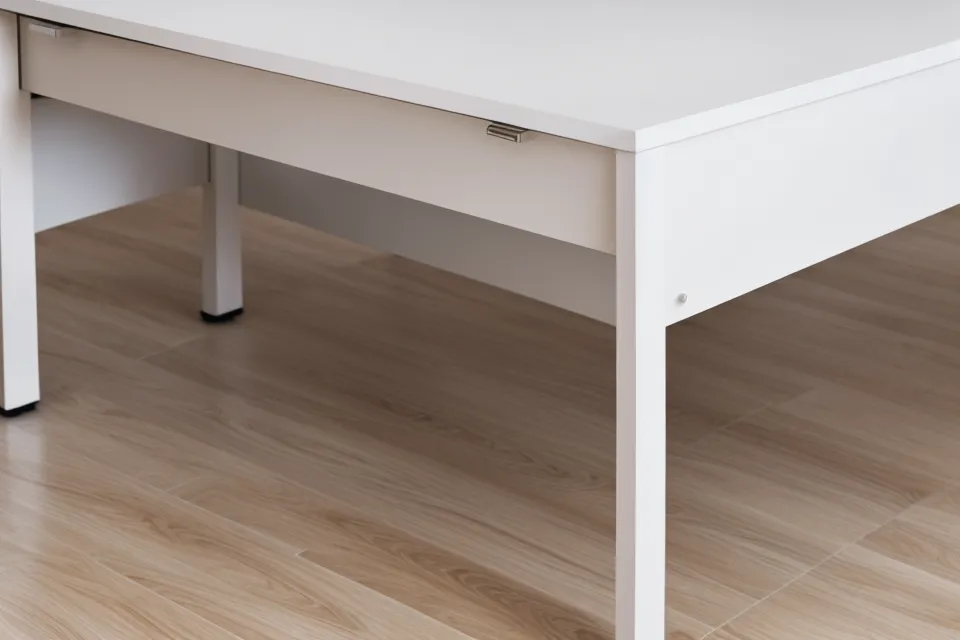
That minimalist look is really the whole personality of the Branch design — clean lines, no visible crossbar between the legs. Most heavier-duty standing desks brace the legs against each other to kill lateral wobble; this one skips that and leans entirely on the thickness of its leg columns and the floor-leveling glides. Fine in theory, except almost no floor in an actual house is perfectly flat, so those glides become something you have to actually manage instead of set once and forget.
Does a Minimalist Frame Actually Hold Steady?
Under real load — a 32-inch monitor plus a laptop riding a mounting arm — the frame asks for more frequent manual leveling than the cross-braced desks I'd used before. Bump it hard enough and there's a genuine sway, not a "the desk is tipping over" sway, more of a "my webcam just made it look like I'm on a boat mid-client-call" sway. It settles fast, but it's noticeable enough that you register it every time.
That 175-pound rating is plenty for a single-monitor setup like mine, but the number only tells half the story. Because nothing braces the legs to each other, piling all your gear on one side makes the lateral wobble noticeably worse — it's the desk equivalent of packing a suitcase with everything crammed into one corner instead of balanced across the bottom. Spread the load evenly and the sway mostly disappears; ignore it and you'll be babysitting those glides every single week.
Toddlers, the Motor, and the Long Haul
My kid decided fairly early on that a desk which rises on its own is basically a ride, and tried to hitch on while it was mid-motion. The motor didn't even hesitate, though I wouldn't build "desk elevator" into anyone's regular routine on purpose. What I've actually gotten used to is a smaller sound — the low thud of my desk chair's casters catching the lip of the floor mat every time I roll back from typing, right before the desk's motor takes over with its own quiet hum.
The height range runs 22 to 47 inches, which is the standard span for this class of motorized desk, and at five-foot-eight I've got room to spare on both ends. About four weeks into standing through my afternoon calls on a regular basis, I got up for a coffee refill and caught myself waiting for the familiar pull in my lower back — it never showed. A friend of mine who plays pickleball most weekends over at Millbrook Exchange Park has started asking if the calf tingle I get after long standing stretches is just day-one court legs; I'm starting to think it might be the same feeling.
Standing that much has also cut down on the slumped, sunk-into-the-lumbar-support slouch I used to default to by mid-afternoon, a habit I've written about before in my 2026 retrospective on disposable furniture — the same piece where I first started thinking seriously about durability versus price instead of just chasing whatever was cheapest that month.
The motor itself is a single-motor system, which moves slower than the dual-motor "executive" versions you'll find at pricier office-furniture showrooms. That's not a dealbreaker for me, but if you want sitting-to-standing in a few seconds flat, the pace here reads more like a slow, steady climb than a quick pop up. Fitting, honestly, since that's also how my whole approach to ergonomics has gone.

My Furniture-Testing Brain Won't Turn Off
Once you start rating furniture for a living — or at least for an oddly specific corner of the internet — you can't turn the habit off. Seat depth adjustment is the first thing I check on any chair now. Too shallow and my knees hang off the front edge; too deep and my lower back loses the support entirely. Armrests get tested for whether they actually move in more than one direction, not just look adjustable in a product photo. Monitor eye-level positioning is another automatic check — a screen sitting too low is usually the difference between a relaxed neck and a sore one by lunchtime. Recline tension calibration is the setting almost nobody touches on a brand-new chair, which is usually why that chair feels "off" for the first week or two. Warranty length has become my rough shorthand for how long a company expects its own furniture to survive; a seven-year warranty like the one on this Branch desk is usually telling you something real.
I size chairs the way I size shoes now, because a frame built for someone six inches taller than me is never going to feel right, no matter how good the reviews read. Seat suspension material — mesh versus foam versus the woven suspension some brands use instead — is its own rabbit hole I've fallen into more than once. On the living-room side of this obsession, modular sofa reconfiguration crosses my mind every time my kid claims a corner of our sectional, and a workspace that folds away at the end of the day matters more to friends fitting an office into a guest room than any of us expected going in. A chair's backrest actually flexing with you instead of staying rigid is one of those things you only notice once you sit in a chair that doesn't do it. Washability rating on a rug wasn't something I thought about until a coffee mug went over near this very desk — now it's near the top of my checklist for anything living in a home office, and performance fabric that shrugs off a spilled juice box is the real reason our sofa cushions still look decent months later.
The Branch Daily Desk Is Worth It
If a completely rock-solid, zero-wobble triple-monitor rig is the goal, this probably isn't your desk — a Steelcase or a heavier-braced Branch model will serve you better there. This minimalist frame is genuinely good-looking, but it asks you to stay on top of those leveling glides and to think about where you're piling your gear instead of just dumping everything on one corner.
For anyone who just wants a clean, motorized setup for a laptop and a single monitor — something that doesn't look like it wandered out of a cubicle farm — the Branch Daily Desk earns its price tier. It survived a toddler treating it like a ride, it survived my own assembly mistakes, and it finally stopped my monitor from rattling every time a Slack message came in on a Friday afternoon. The lesson I keep coming back to, across every chair and desk I've tested since: sturdiness has less to do with how expensive something looks and more to do with whether the engineering underneath matches the price you paid for it.
Branch
Pros
- + Minimalist aesthetic fits perfectly in home offices without looking 'corporate'
- + 7-year warranty provides much better peace of mind than budget brands
- + Motor is surprisingly quiet with a smooth, low-frequency hum
- + Price point is a great middle ground between disposable and high-end
Cons
- ✘ Requires frequent manual adjustment of leveling glides for stability
- ✘ Single motor lift speed is slower than premium dual-motor desks